
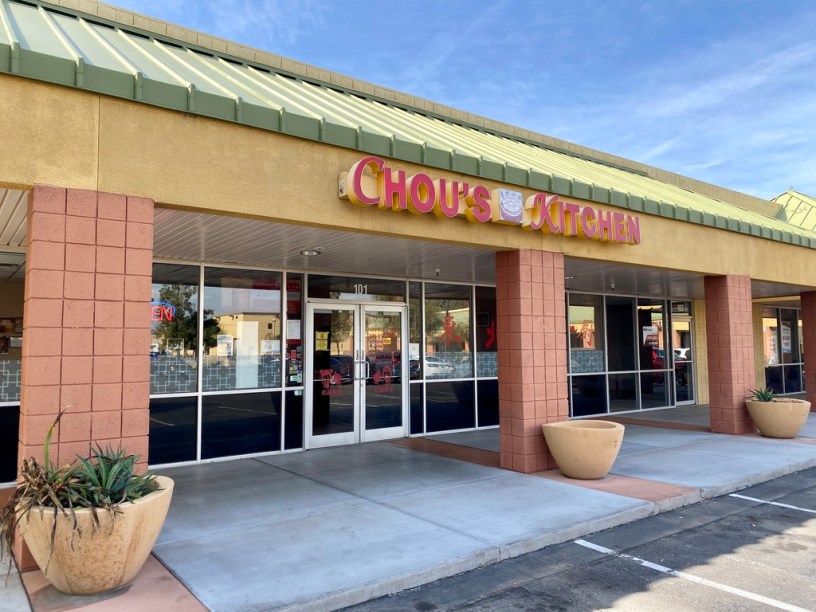
Update: Since the publication of this review, the Tempe location of Chou’s Kitchen has become Kungfu Kitchen under separate ownership.
Within the vast nation of China, there are a few regions that dominate the American restaurant landscape. Cantonese is easily the best known. The dishes of southern China and Hong Kong dominate the default approach for most Chinese restaurants in the United States. A little more variety is added via the influences of the interior Hunan and Sichuan provinces. The northeastern corner of China, sometimes known as Dongbei, is far less visible on American menus, but Chou’s Kitchen in Tempe highlights what that region near Korea has to offer.

Chou’s is a second branch of a restaurant that originated in Chandler, and it is sometimes branded as “Kungfu Kitchen” on its website and portions of its tableware. It’s not entirely clear if that alternative brand is something the restaurant is moving towards or leaving behind, but either way, the Tempe location of Chou’s offers a menu that maintains a focus on northeastern China and augments it with a well-executed selection of dishes from other regions to bridge the gap for customers not entirely ready for a journey beyond their American Chinese classics.

Chou’s is found in a small strip mall on the corner of Dorsey and Apache, just east of the Arizona State University campus in Tempe. The location puts the restaurant diagonally across the street from Dorsey/Apache station on the A Line and the stop for the Tempe Streetcar. Abundant bike racks are found at the corner of the L-shaped retail plaza with more located at the shopping center’s western edge. Despite the dual identities for the restaurant, the red signs facing both the parking lot and Apache Boulevard proclaim “Chou’s Kitchen.”

The interior is sparse but clean and welcoming. For the most part, Chou’s is a restaurant that puts its effort purely into the food with its only decor being a few lanterns suspended from the ceiling and plaques noting various awards received.The printed menu is manageable in size and scope compared to many Chinese restaurants that try to be all things to everyone, but it still offers enough variety to appeal to most palates. A whiteboard on a stand near the front sometimes offers additional specials that may eventually migrate onto the printed menu.

With Dongbei’s location in China’s northeast, there is unsurprisingly a greater emphasis on wheat as a staple grain than rice. That approach is evident when looking at the choices offered under the menu heading of “dumplings,” the closest analog to what customers accustomed to eating in courses might perceive as appetizers. Although there are numerous kinds of dumplings offered, this section is also home to pot stickers (distinct in shape from dumplings), a smoky scallion pancake, and ubiquitous crowd-pleasers like vegetable spring rolls.
The dumplings are one of the pre-eminent items to order here, and they come in the xiao long bao variety commonly known as “soup dumplings” for their juicy broth, as well as ones with fillings of pork and napa cabbage, shrimp and pork, or just vegetables. Larger and crisper than either dumplings or pot stickers, small pies stuffed with beef or pork provide a filling handheld option. The chive-and-egg pockets go heavy on the green allium leaves in the filling while adding some scrambled egg and glass noodles to the mix inside the crisp flour-based crust.

The emphasis on wheat continues with several noodle dishes, including tan tan mein, also sometimes known as dan dan noodles, with slivers or cucumber and ground pork. It extends to a hearty beef stew with noodles and a dark base, as well as sesame paste noodles. The wintry feel of the menu is also found in the abundant use of vegetables such as eggplant, cabbage, and even potatoes. A fish filet and sauerkraut soup swims in a tangy broth replete with sliced scallions. Green onions also figure prominently in the fragrant and flavorful cumin beef dish.

Clay pots are another area of emphasis here with meals served in thick ceramic vessels containing bold mixes of pork intestine and pickled mustard greens or more familiar ones like chicken and mushrooms. They’re a cooking technique that comes closer to braising as an alternative to wok-frying, the more familiar American Chinese restaurant kitchen technique. The basil shrimp does not involve a clay pot but instead comes in a pouch of foil containing not only numerous crustaceans and the named herb, but also countless bits of celery and scallions.

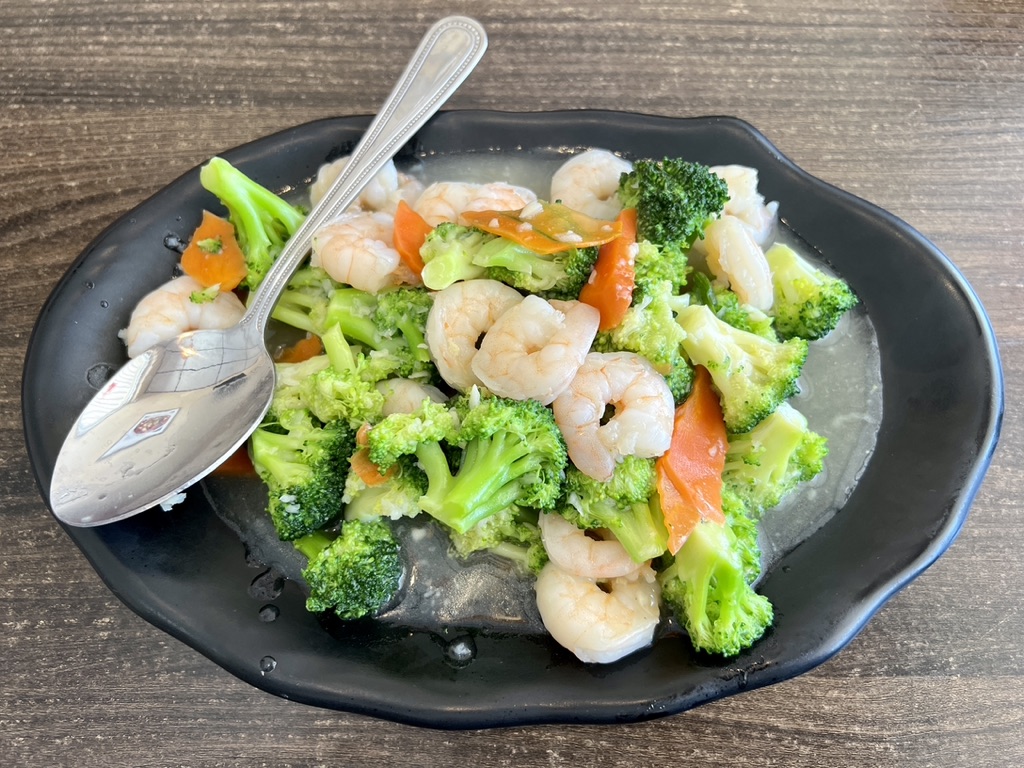
Meatless dishes include a simple but effectively spicy cabbage and braised tofu with scallions and vegetables. While Chou’s offers regional fare to tempt customers with a desire to explore another aspect of Chinese cuisine, it also provides ample selections of Chinese restaurant classics like orange chicken, kung pao, and a basic shrimp and broccoli in a light garlic sauce more often found on Cantonese-inspired menus in America. These dishes are consistently strong and can help overcome the veto of anyone not ready for Dongbei’s distinctive dishes.

Chou’s beverage selection is limited to sodas, lemonade, and a selection of iced and hot teas. The restaurant does not have a liquor license. Likewise, Chou’s does not have a dessert menu; however any desire for something sweet after the meal can be satisfied with a trip to one of two fellow tenants in the same shopping center: Mango Rabbit, a shop for boba tea and bubble waffles, and Neko Mart, a store devoted to imported Japanese snacks like matcha Kit-Kats. By keeping to its unique regional focus, Chou’s adds another note to the diversity of Tempe dining.
1250 E. Apache Blvd. #101, Tempe AZ 85281
https://www.yumtempe.com
 PHX Rail Food
FYI, Kung Fu Kitchen has no association with Chou’s Kitchen, other than taking over the Tempe location