
For the past few decades, American cities, suburbs, and even some small towns have experienced the results of one nation’s approach to gastrodiplomacy. The government of Thailand’s efforts to make Thai restaurants nearly ubiquitous in America has largely succeeded, making satay and green curry available from coast to coast. The downside, however, has been the reduction of Thai cooking to a certain sameness. Most menus go heavy on both American and Chinese influences and are light in their reflection of regional variations within Thailand.
Lom Wong, a husband-and-wife partnership at the north end of downtown Phoenix, is a bold attempt to break free from the Thai restaurant stereotype by foregoing the usual modular menu in which any protein can be paired with any sauce. In addition, there is a focus on regional cuisines and traditions rather than modern day dishes like pad Thai, which although enjoyable in its own right, was contrived more for export than for consumption in Thailand itself. The resulting experience takes a bit of adjustment but is worthwhile for a deeper appreciation of Thai food.

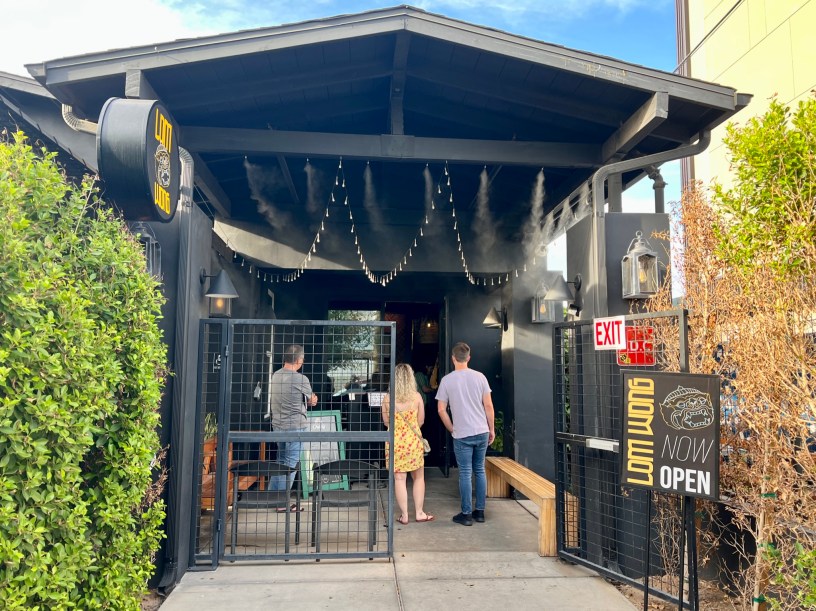
Lom Wong has evolved from a pandemic-era pop-up to a full service restaurant in an historic bungalow on Portland Street. The house has been home to several places that have lasted only a year or two, but Lom Wong seems likely to stay around longer. The location is three blocks from Roosevelt/Central station on the B Line, and bike racks are found around the corner on Second Street. The restaurant’s entrance is marked by an outdoor host station that leads to both a shaded patio and a dining room with dark wood tables and lights decorated with orchids.
The menu is divided not into conventional sections of appetizer and entrees, but instead by region. At the top are dishes from Chiang Rai, the northern tip of Thailand. Towards the bottom are foods from the Moklen people in the southern part of the country. As might be expected for a seafaring population, the Moklen dishes focus more intensively on seafood, while the items from the country’s northern interior lean more towards pork or beef as proteins. The menu has some perennial favorites that have been present from the start, but a great deal changes seasonally.
A relatively simple preparation of fried chicken wings, gai tawt won pen, has a pleasing
crunch accentuated by slivers of shallots and a side of sweet chili sauce for dipping. Another popular choice is the yam mamugan boran, a green mango salad. While this dish might seem at first glance like tom sum, a green papaya salad found on many Thai menus, it’s actually quite different. Sweet and slightly soupy from coconut cream, it’s more like a mango slaw and can serve as an effective counterpart to the chicken wings or any of the more spicy foods offered.

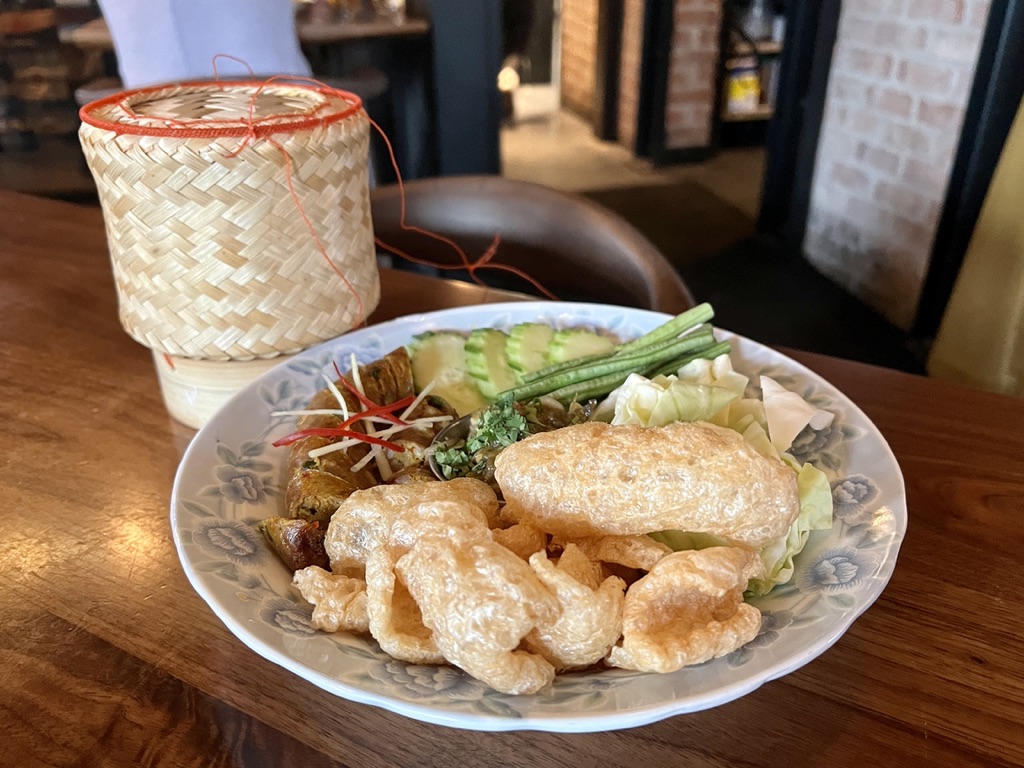
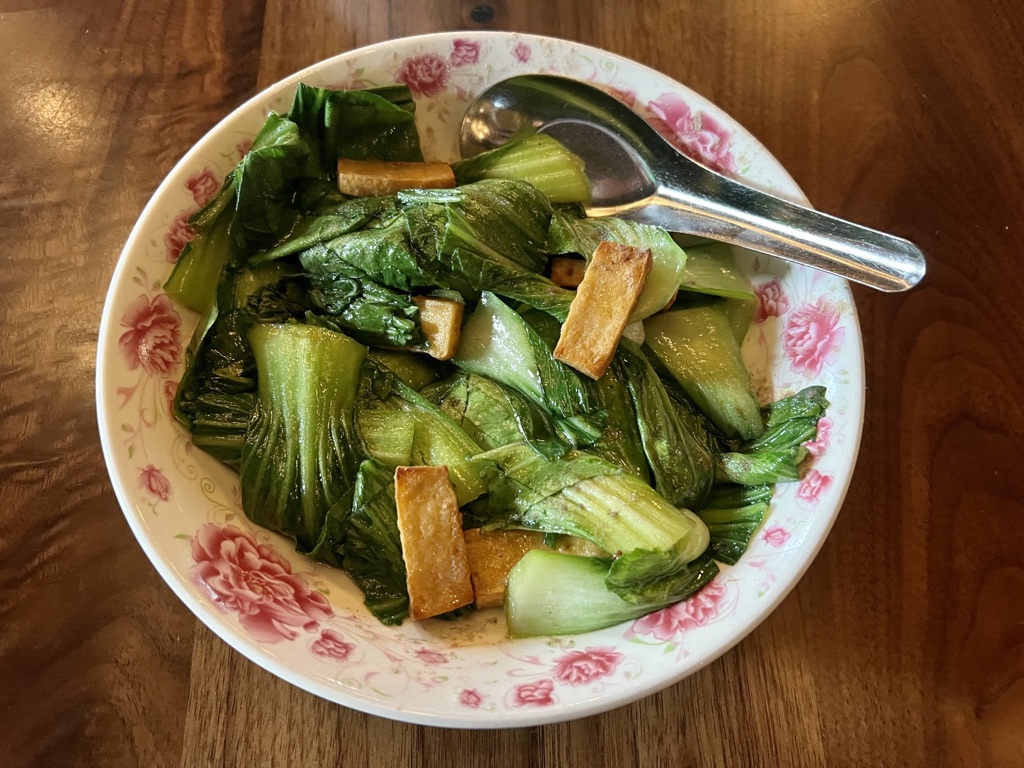
Another relatively straightforward item is a small stir-fry of tofu and bok choy with garlic and chili. Too small to be an entree on its own, it functions well as a vegetable side dish. The rest of the menu moves in a direction of more complex dishes that reflect the nuance and balance of flavors intrinsic to Thai food. Charcoal-grilled northern Thai sausage, sai ua, is served with nam prik noom, a dip made with roasted green chilies, shallots, and cilantro. Pork rinds are provided for dipping, and sticky rice is served in a basket lined with plastic wrap to retain moisture.

One of the Moklen seafood items on the current menu is not to be missed: Aw kan klhak is a medium spicy seabass curry. It’s not overpowering at first but builds to a slow burn that accentuates the mild taste of the fish without obscuring it. A red curry of Northern Thai origin is kaeng phet charinda with a coconut base, beef, eggplant, and basil. A meatless alternative is kaeng phot fak tawng with kabocha squash, bamboo shoots, makheua eggplant, and Thai basil. As with the fish and beef curries, the sauce is a bit less creamy than at many Thai restaurants.
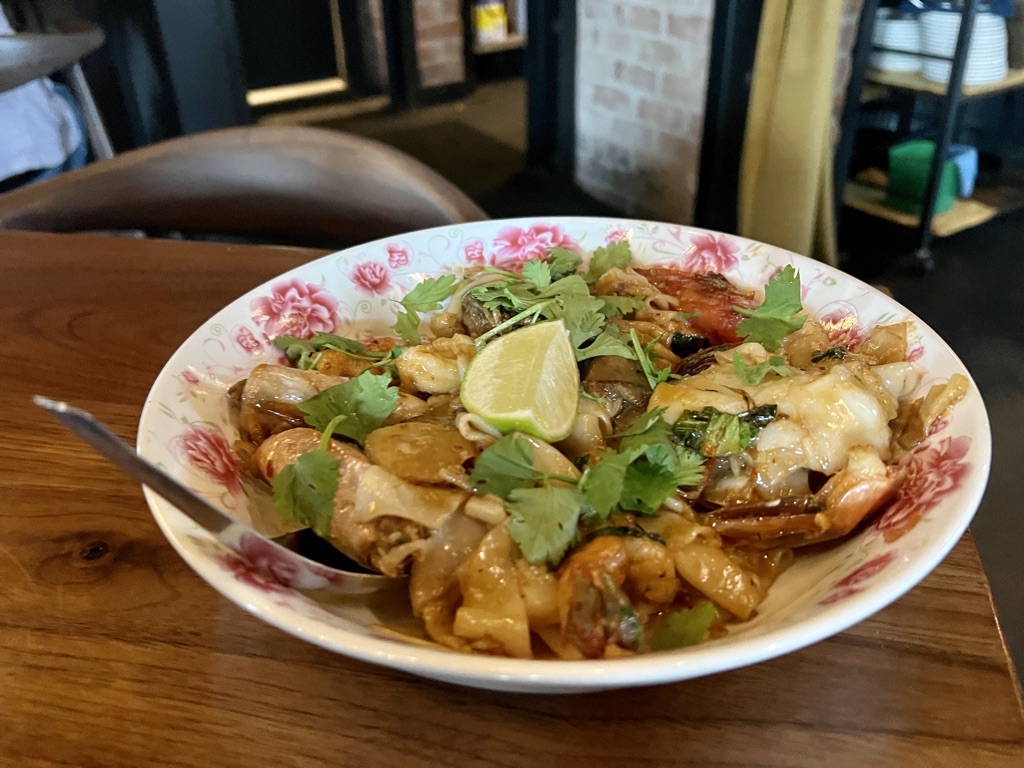
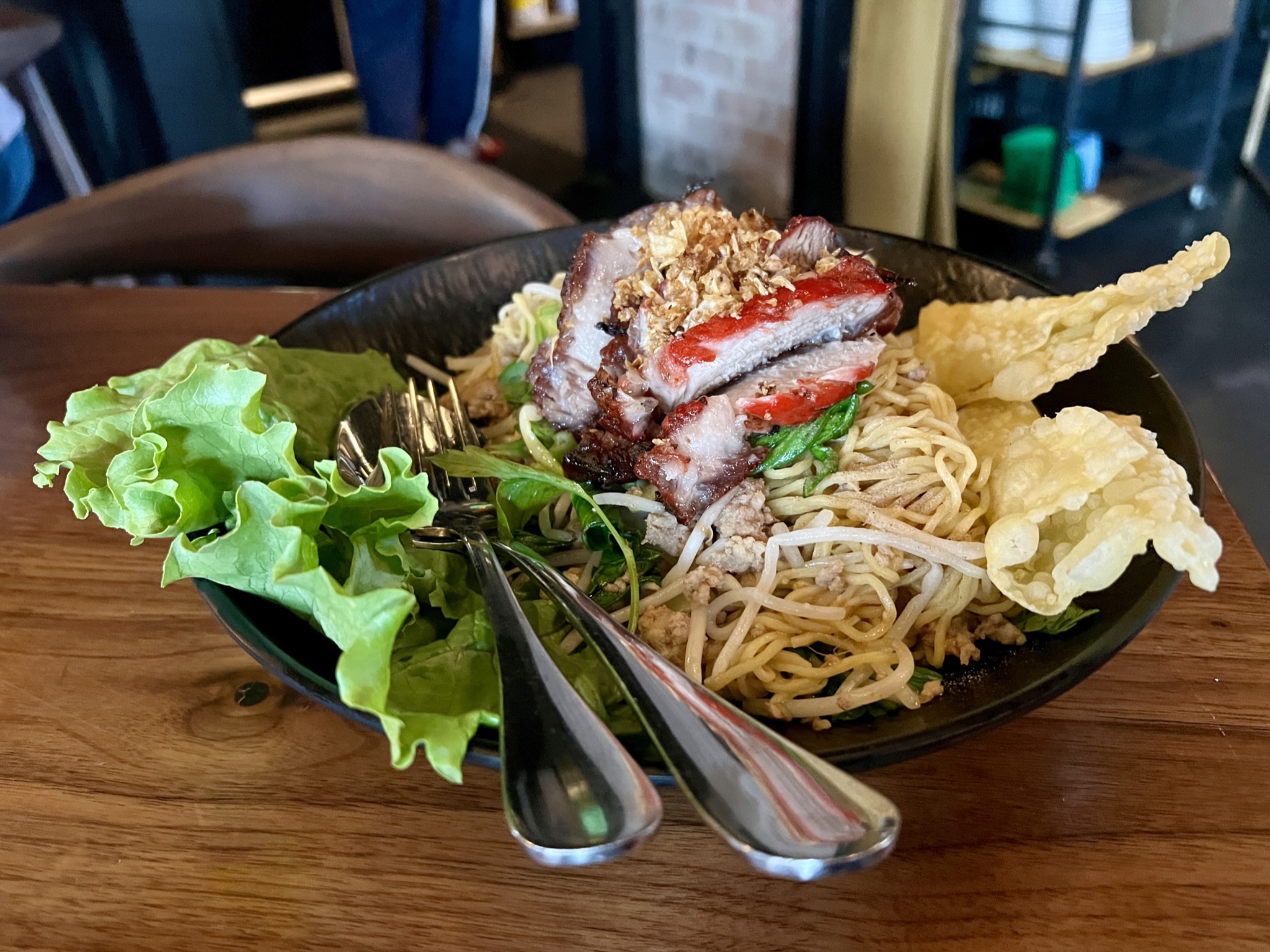
As with any Thai restaurant, there are noodle dishes on the menu, although like the curries and stir-frys, they reflect specific regional recipes rather than the more commonly encountered pad Thai or pad see ew dishes. Bamee haeng mu dang are springy egg noodles with pork two ways – char siu with a crisp crust and ground pork – served with plenty of bean sprouts, fried wontons, some bok choy, and a bed of lettuce. Tom yum haeng sen yai involves wide noodles tossed with tomatoes, straw mushrooms, and langoustines, large crustaceans served whole.
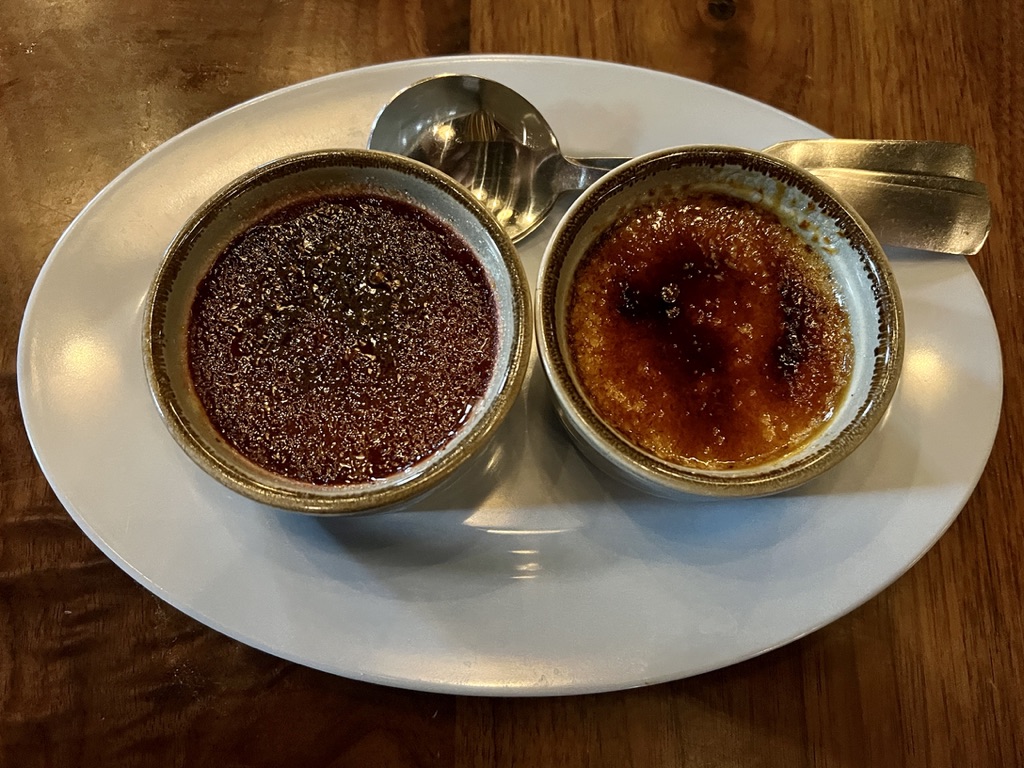
For dessert there are two offerings. One is a coconut ice cream sandwich enhanced with scotch, sticky rice, and peanuts. The slices of Wonder Bread encasing the frozen treat might make sense in a street food context but seem pointless on a plate. The creme brulee duo is more successful with a pairing of lemongrass and roselle (an African variation of hibiscus) as the featured flavors. The beverage selection focuses on natural wines and cocktails like Thunder’s pina colada, a classic given an unexpected but welcome savory kick with a bit of fish sauce.

As one of the owners is quick to point out in response to online reviews, the Lom Wong concept is not for everyone. The food is not as customizable as at most Thai restaurants, where a promise of any sauce with any protein at any spice level is the norm. There is also an expectation that all dishes should be ordered at once and served when ready rather than in courses. It’s a model that appears to be working, though, with reservations a near necessity on weekends. With Thai food firmly established in America, Lom Wong takes it back to its roots.
218 E. Portland St., Phoenix AZ 85004
http://www.lomwongaz.com
 PHX Rail Food