

As Chinese food has spread to nearly all corners of the globe, it is no surprise that it has blended with local cuisines to create hybrids. There is Indo-Chinese food with dishes like gobi Manchurian and hakka noodles. Chinese-Mexican food has arisen in communities along the border. Of course, China’s culinary influence is felt within eastern Asia, particularly in nearby countries such as Vietnam and China. Korea is no exception, and Chinese-Korean food is the focus of Jeong’s Noodle, one of the stalls in the H Mart food court in the Mesa Asian District.
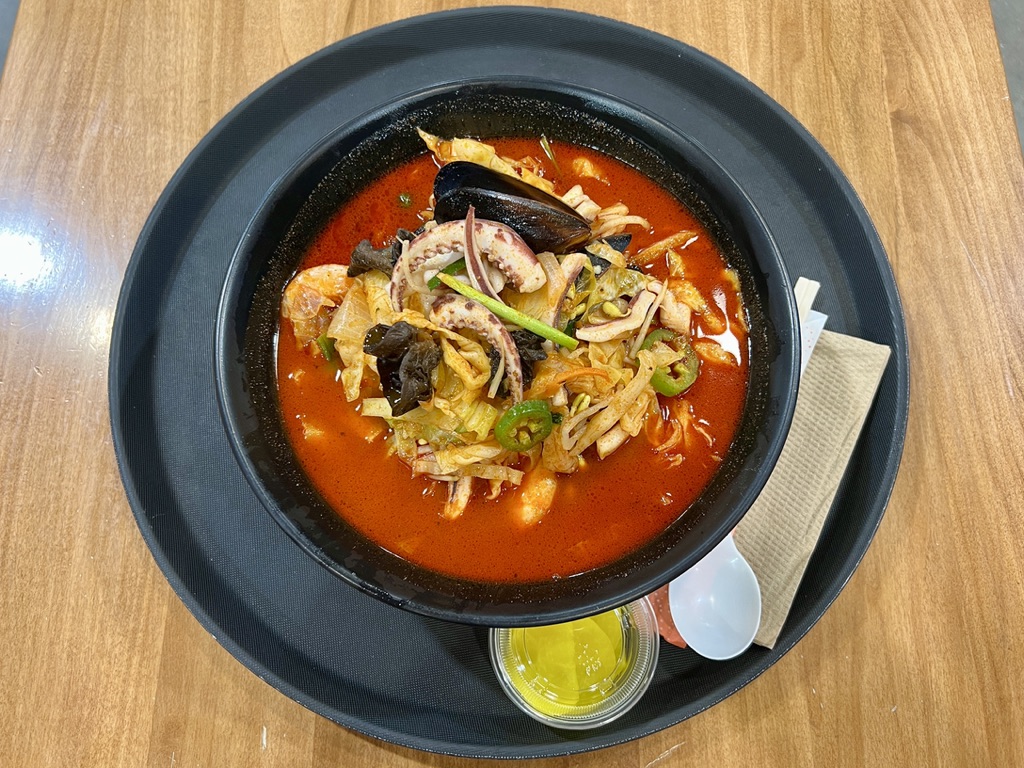
Jeong’s Noodle occupies the last stall on the left as one walks deeper into the food court, or “market eatery” as it is officially known. H Mart itself is across the street from Sycamore/Main station on the A Line, and bike racks are found outside the supermarket’s western entrance (the one farther from the food court). As with all vendors inside H Mart, the menu is displayed on overhead boards. Customers order from the cashier, find a table in the bustling food hall and listen for their numbers to be called via the automated public address system.

As the name of the food stall suggests, the menu is focused most intensively on the noodle dishes that predominate in Chinese-Korean cooking. That includes jajangmyeon, or jajang for short, thick wheat noodles in a black bean sauce, and jjampong, a soup of noodles and seafood. Jajang is salty and slightly sweet, and the jjampong at Jeong’s Noodle has a mild spice level. Both of these foundational foods are then offered in numerous variations with different meats, vegetables, and seafood added to the generous bowls and platters they are served in.
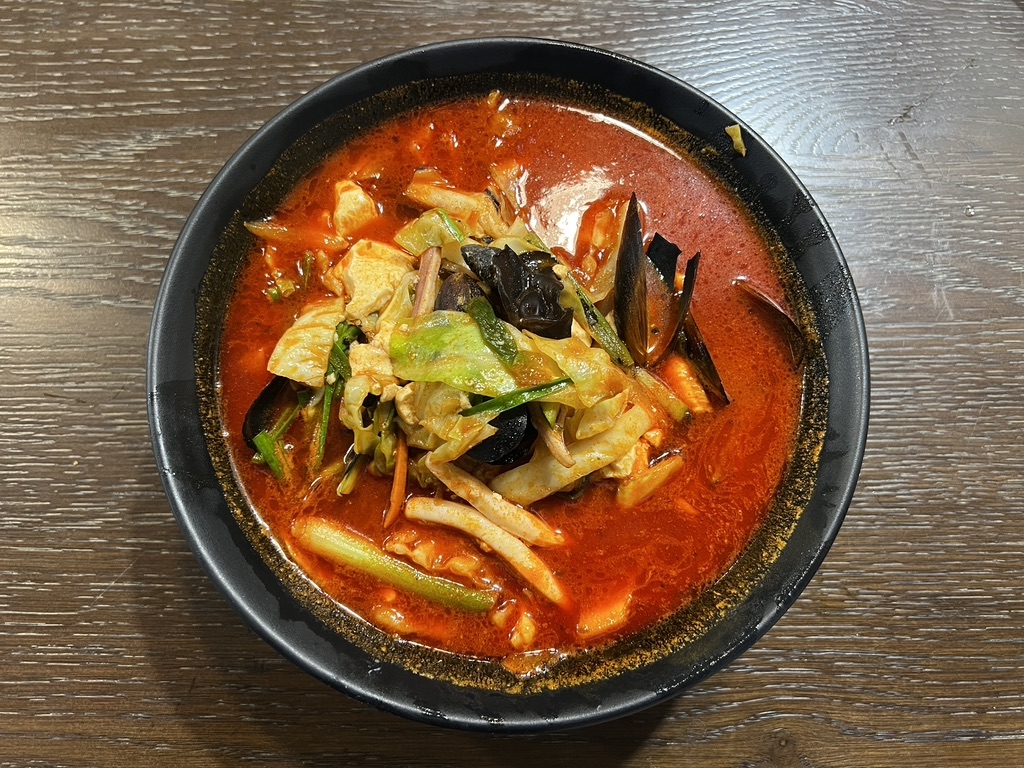
Tofu and brisket variations of jjampong add either tender beef or bean curd to a tangy broth full of whole shrimp (tail, head, and shell all left on), calamari, mussels, scallions, cabbage, bean sprouts, and wood ear mushrooms. Gochujjajong adds the familiar red chili paste gochujang to the broth to bring the soup an extra note of spice. Likewise, jajang can be ordered with seafood, fried egg, or even ground beef. The last of these options, uni janang, is somewhat like Cincinatti chili, which is typically served over spaghetti, with a black bean base instead of tomato.
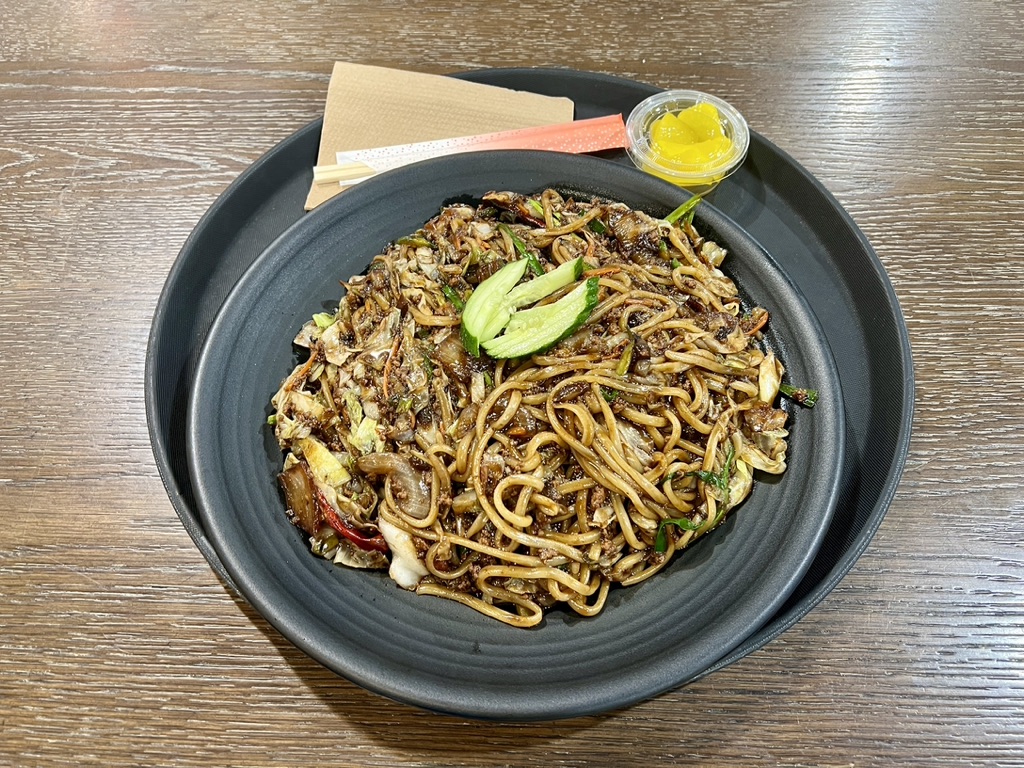
All of these meals come with a bit of banchan, small cold vegetable side dishes. Usually, it’s a some pickled radish or a little kimchi. A request for some added spice will yield a small container of gochugaru, or red chili pepper flakes. Although noodles are the predominant starch in most of the jajang and jjampong items, there are some variants that include rice. Rice takes over for noodles entirely in a few of the dishes which are Korean analogs of familiar American Chinese food. Most of these involve meat that is breaded and fried before and then covered in sauce.
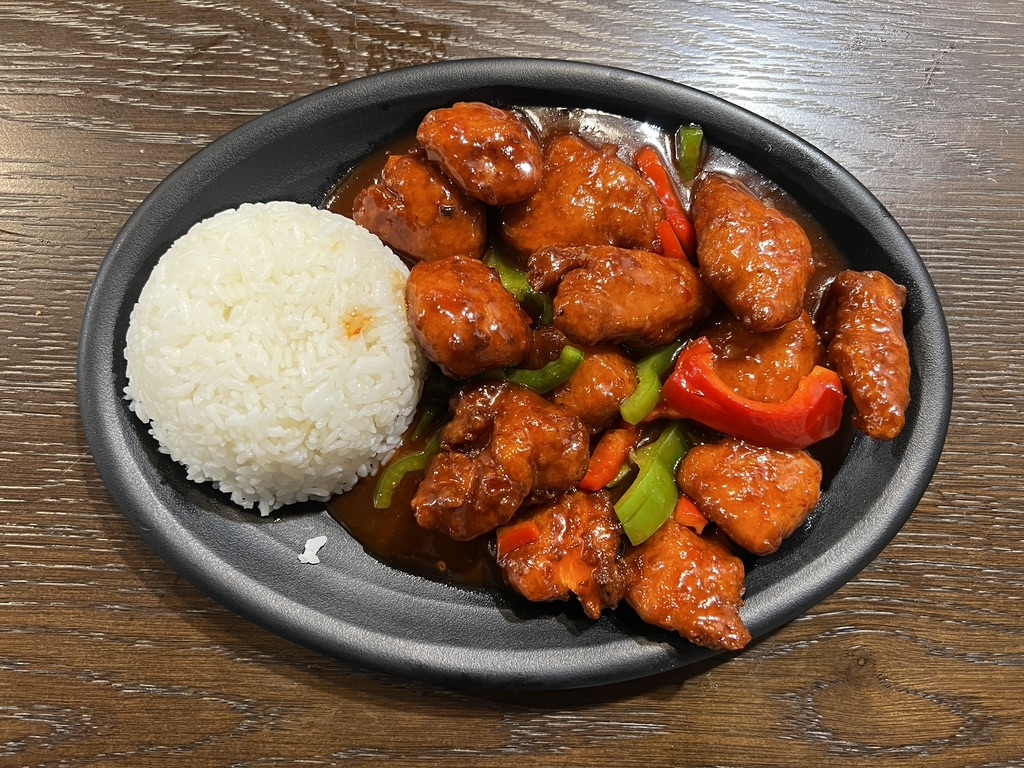
Among these, the most indulgent is tangsuyuk, fried cubes of pork with sauce that recall both Mexican carnitas and American Chinese sweet and sour dishes. The orange chicken is a generous portion of a classic from so many Chinese menus in the United States, and kung pao is available with either chicken or shrimp. Heavily breaded and deep fried, either protein is served in a sweet and tangy sauce. There are some scallions, expected due to their prevalence in Korean cooking, but none of the bell peppers, celery, or peanuts seen in many American interpretations of kung pao.
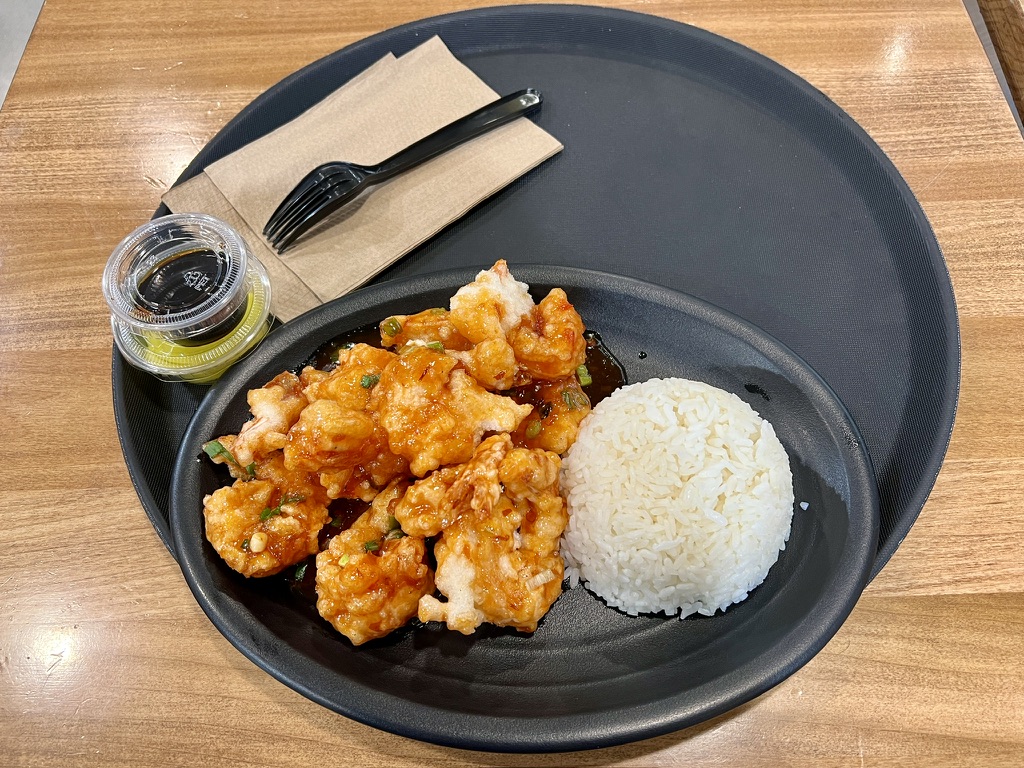
Mayo shrimp leaves out the vinegar and sugar usually found in kung pao and focuses instead on a thick white coating applied to fried crustaceans. A serving of dumplings, suitable as an appetizer or just something to be shared at the table, features eight large, crisp pockets full of a seasoned ground pork filling. Like all of the fried items here, the portion size is so large that two or more people can easily share the bounty. The jajang and jjangpong noodle dishes, in contrast, are less overwhelming although still hearty enough to satisfy most appetites.

Jeong’s Noodle offers only bottled water and canned soda in its beverage case. A few nearby food stalls also sell iced tea, and a more extensive beverage selection is found in H Mart, although the store’s liquor license does not permit on-site consumption of the beer and soju sold next door. There is no dessert, but Snowtime and Paris Baguette offer some sweets within the food court. Combinations of Chinese food and other cuisines have become both common and varied. At Jeong’s noodle, Korean cooking is the vehicle for another successful hybrid approach.
1919 W. Main St., Mesa AZ 85201
 PHX Rail Food