
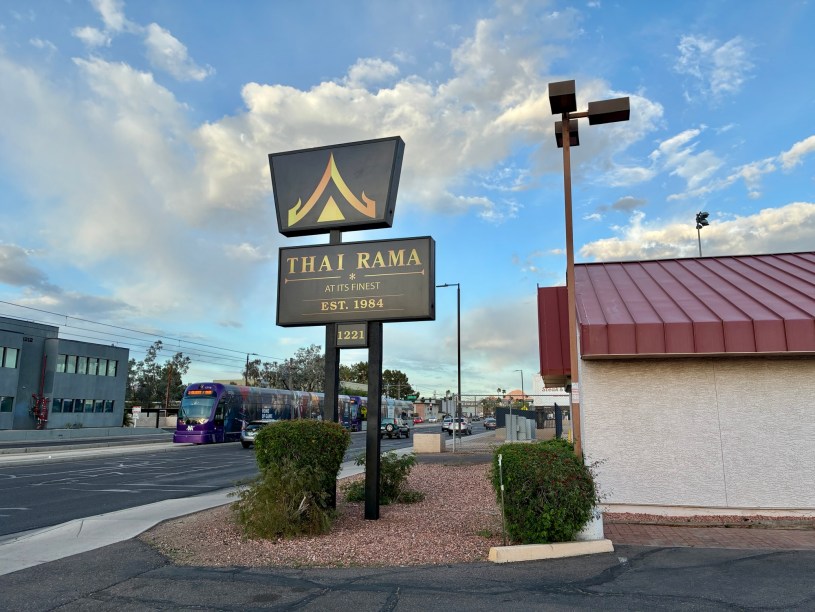
Thai restaurants seem to come and go at a high rate in Phoenix, expanding and contracting in loosely affiliated networks of establishments with the same name owned by different family members or business associates. One local veteran, Thai Rama, has varied its suburban locations over the years but has remained a consistent presence in central Phoenix. Near the Melrose and Grandview neighborhoods, Thai Rama has stood for several decades in a standalone building a few blocks west of 7th Avenue / Camelback station on the B Line.
The restaurant site lies along a lonely stretch of West Camelback that awaits future redevelopment. The restaurant’s decor is not particularly special, but it’s not shabby either. It’s a pretty typical American Thai restaurant look with dark wood furniture in a dining room punctuated with the occasional decorative plants or Buddhist imagery. The best seating is on the north side of the dining room, where spacious booths have windows with a view of passing trains. There is no bike rack per se, so riders will have to lock up at a pole in the parking lot.
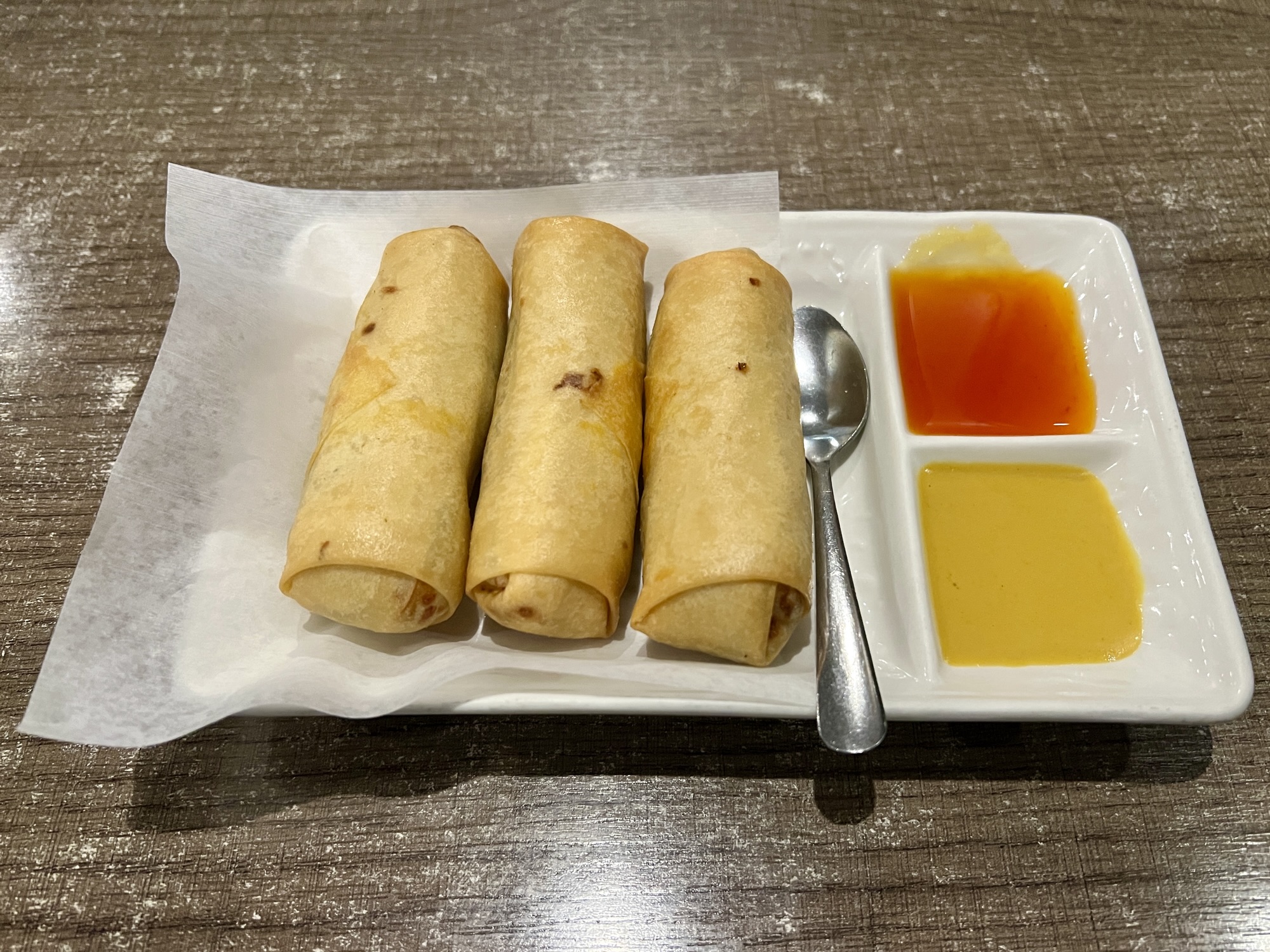
It seems Thai Rama was once a little more ambitious with some items not always seen on the typical American Thai menu and rotating specials on a chalkboard near the door. Recently, it seems to have settled into the role of a neighborhood restaurant serving an above average rendition of the typical Thai menu but not trying to stretch much beyond that role. The egg rolls function well as a basic appetizer. They’re vegetarian, crisp, fresh, and not too greasy. Likewise, the satay is successful with skewered chicken with sides of peanut sauce and cucumber relish.
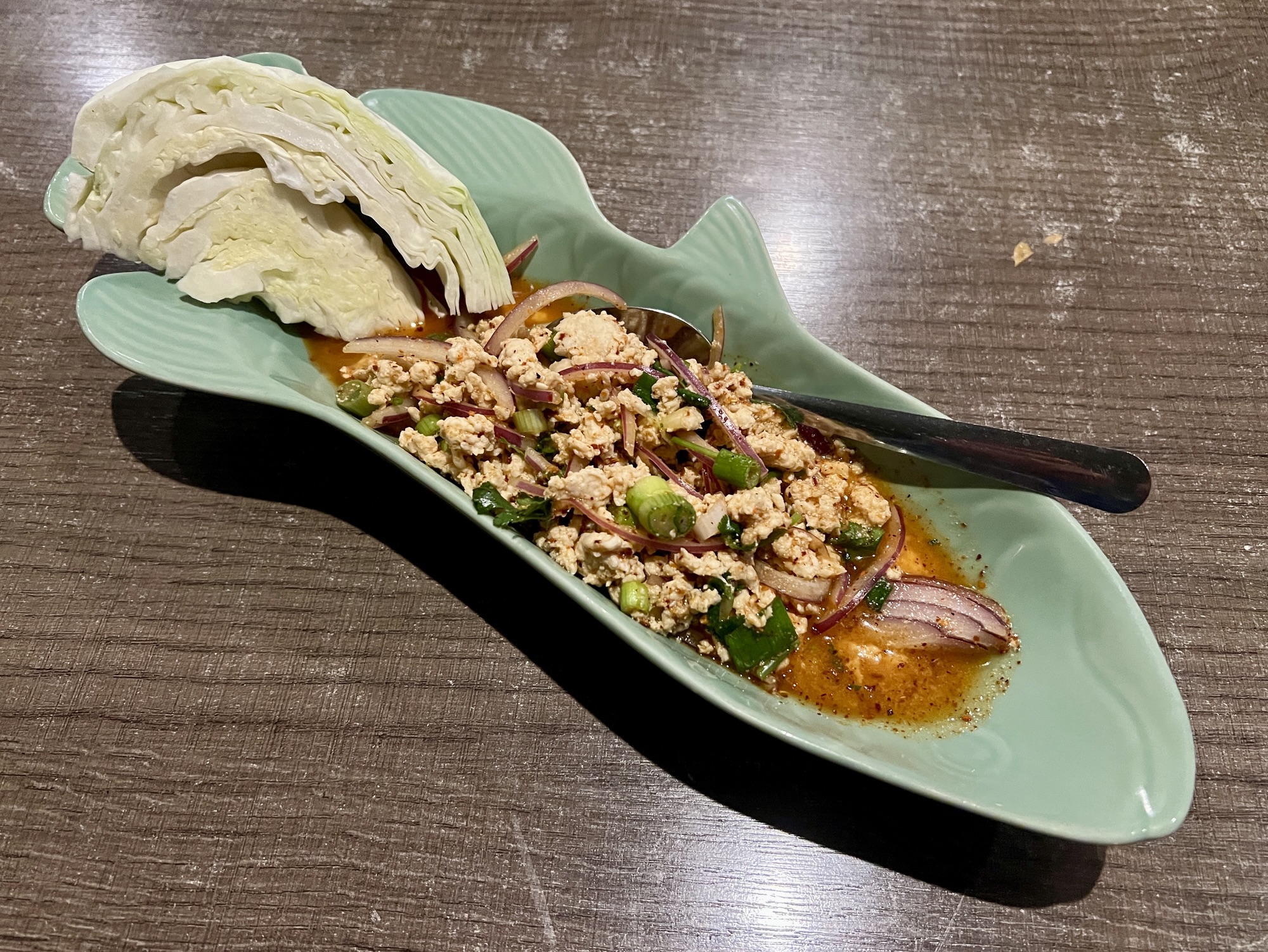
A spicier appetizer is larb, a salad from Laos and northeastern Thailand made with ground chicken with onions, chilies, herbs, and cabbage. Soups served in large tureens for sharing at the table include the usual choices like tom kha gai with a coconut milk broth and tom yum gai with a tart lemongrass broth. Both come with chicken by default, the “kha” can be replaced with other proteins on request. Other soup choices include silver noodles with mixed vegetables and chicken in a clear broth and a seafood hot pot with lemongrass, galangal, and Thai lime leaves.

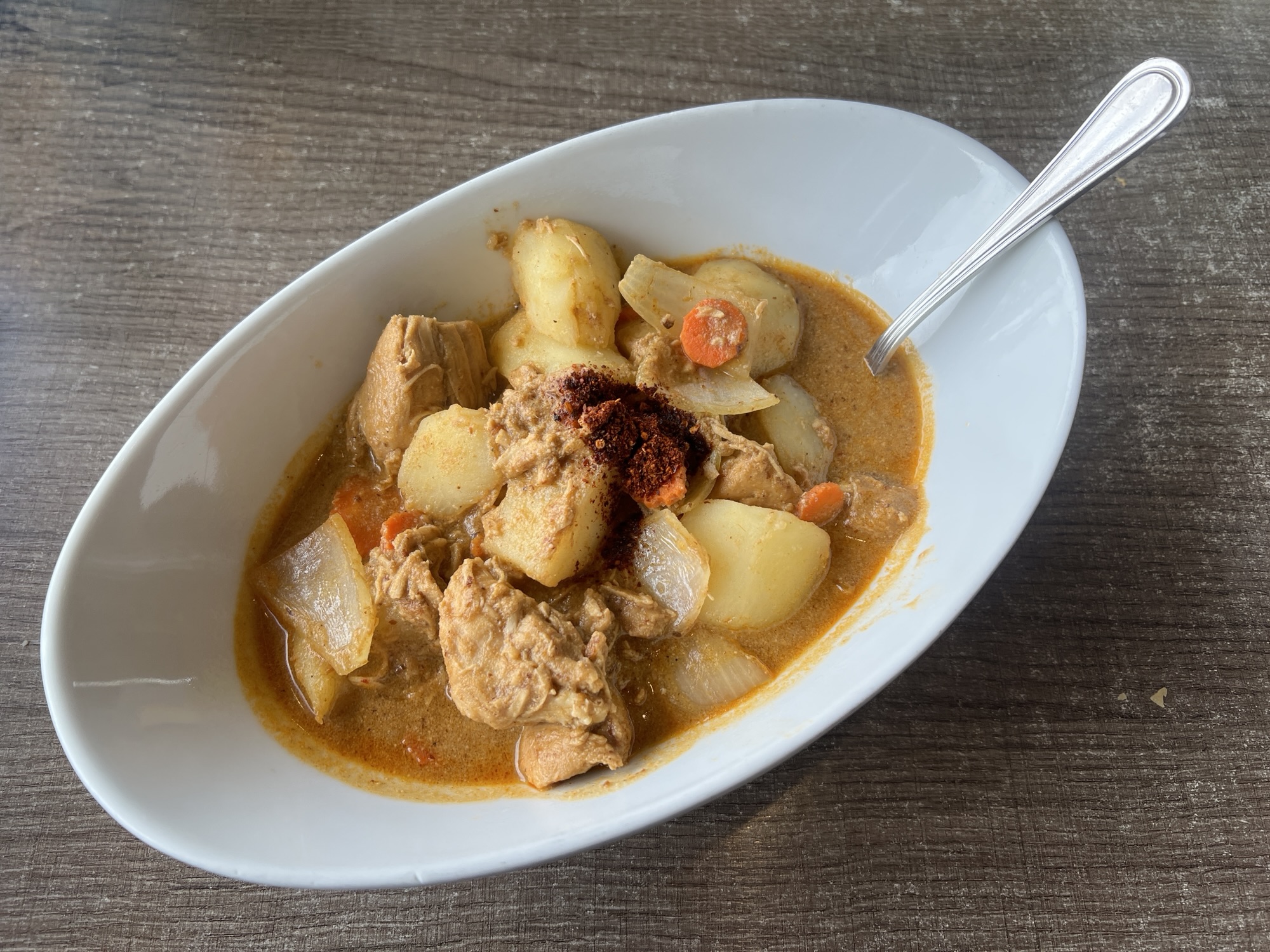
The curries contain typically complex blends of flavors. The green curry is noticeably spicy even when requested mild, and the massaman curry stands out at both locations. While many Thai restaurants will instantly throw whatever protein is requested in whatever sauce the customer prefers, massaman curry should be treated differently. Thai Rama gets it right with beef or chicken, along with potatoes, slowly simmered in a sauce based on coconut and peanut flavors. The result is a sort of Thai pot roast with a distinct peppery flavor but not overpowering heat.
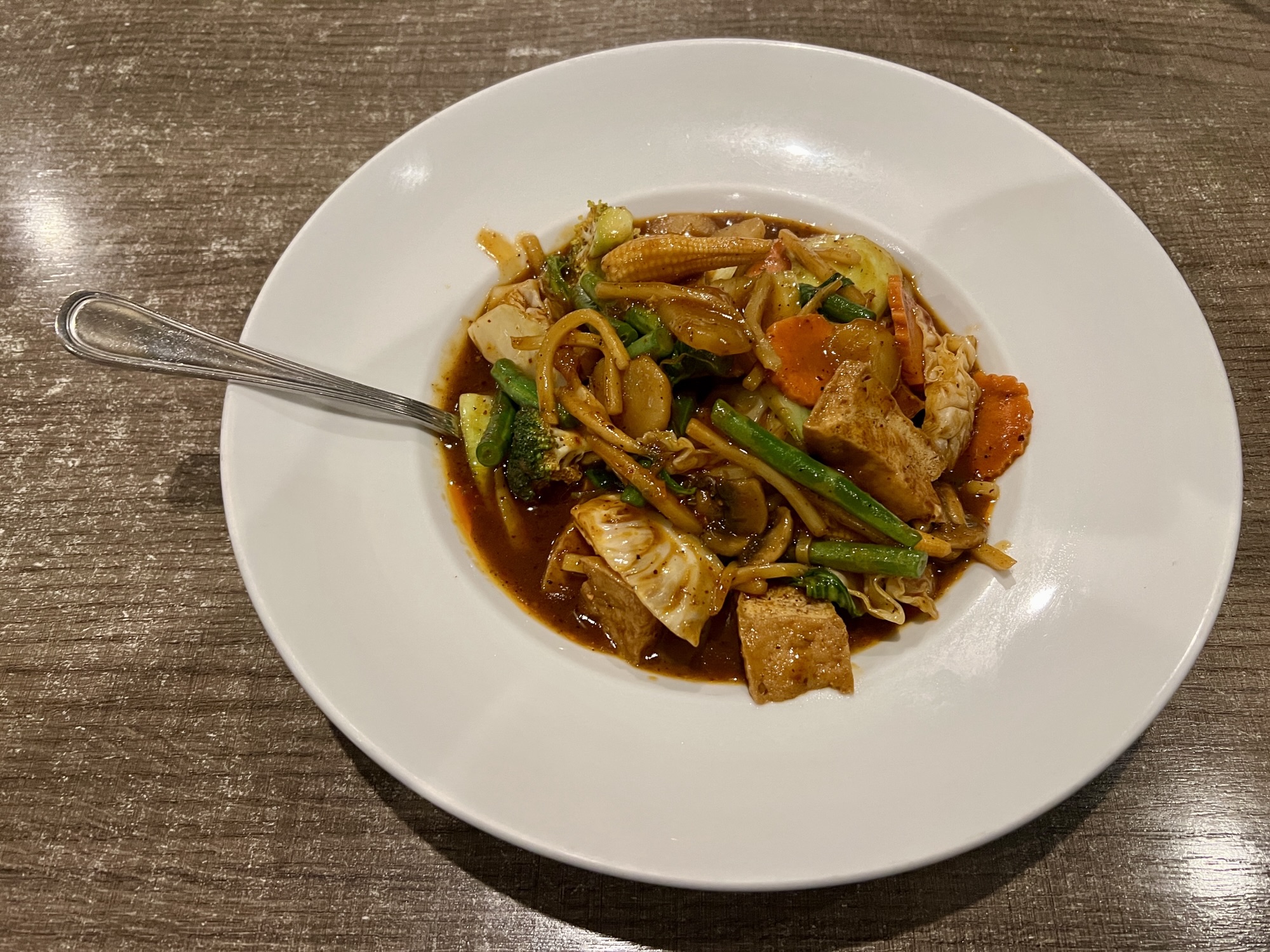
Among the noodle dishes, pad see ew is simple but effective with wide noodles combined with broccoli, meat or tofu, and soy sauce. Drunken noodles swim in a mix of soy sauce, black pepper, basil, and chilies with “medium” seeming to be the high side of mild here. Pad Thai, a dish invented specifically for export, is a satisfying take on a ubiquitous menu favorite. Rad na, a Chinese-Thai amalgam of broccoli and wide noodles, is served in a thick brown gravy. All of the noodle dishes, like much of the menu, can be accessorized with a choice of meat or tofu.

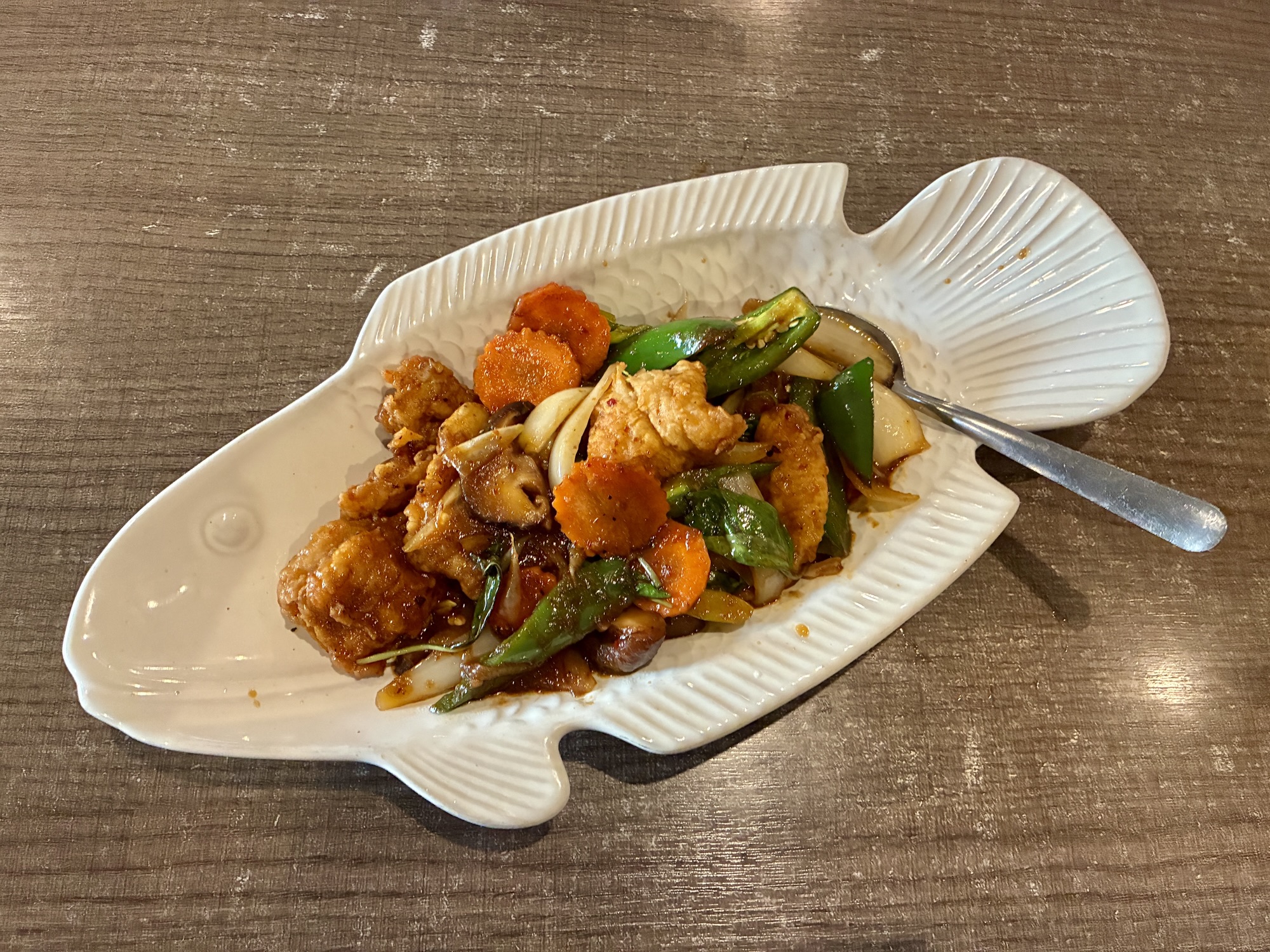
There are numerous stir-fries and grilled entrees on the menus. Many are light with predominant notes of ginger or garlic and plentiful vegetables combined with the chosen protein. In contrast, chili fish basil relies on a darker sauce of fresh chillies, onions, black mushrooms, carrots, and Thai basil to adorn mild catfish filets. Mango Delight reaches a sort of equilibrium with tropical fruit and assertive spice. Fried rice comes in a house style with a choice of meat or tofu, as well as a pineapple version that is a classic dish from old school American-Chinese-Thai menus.
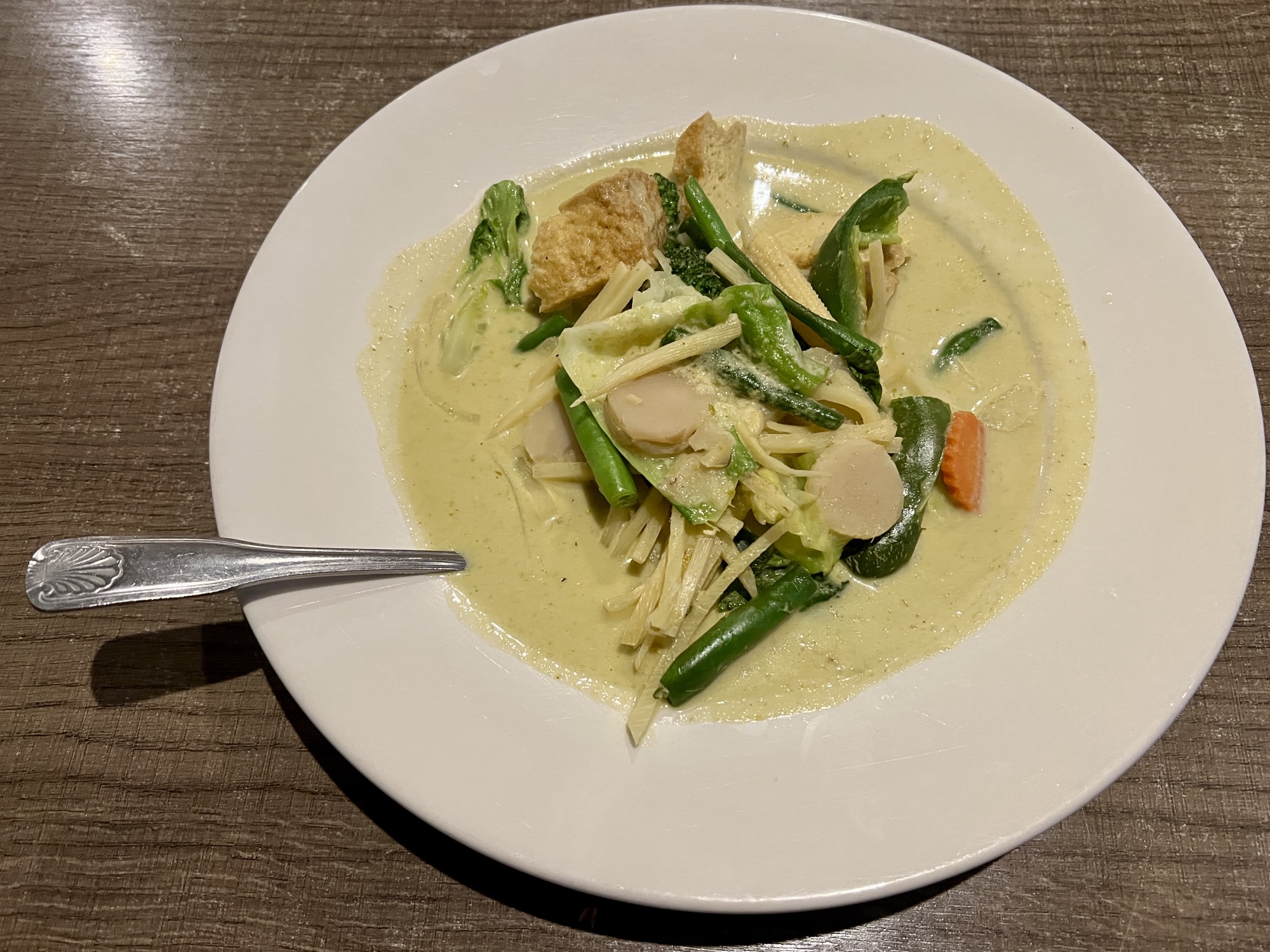
While nearly all the curries listed with beef, chicken, or pork can be made with tofu instead of the listed meat, there is also a dedicated vegetarian section on the menu. Jungle curry contains a variety of vegetables in a prik khing style, a preparation that relies on frying curry paste and is dryer than similar dishes due to the absence of coconut milk. Lunch specials are a dependable lineup of curries, noodles dishes, and stir-fries presented in individual servings with an egg roll, a fried wonton, steamed rice, and a cup of soup full of vegetables, tofu, scallions, and peas.
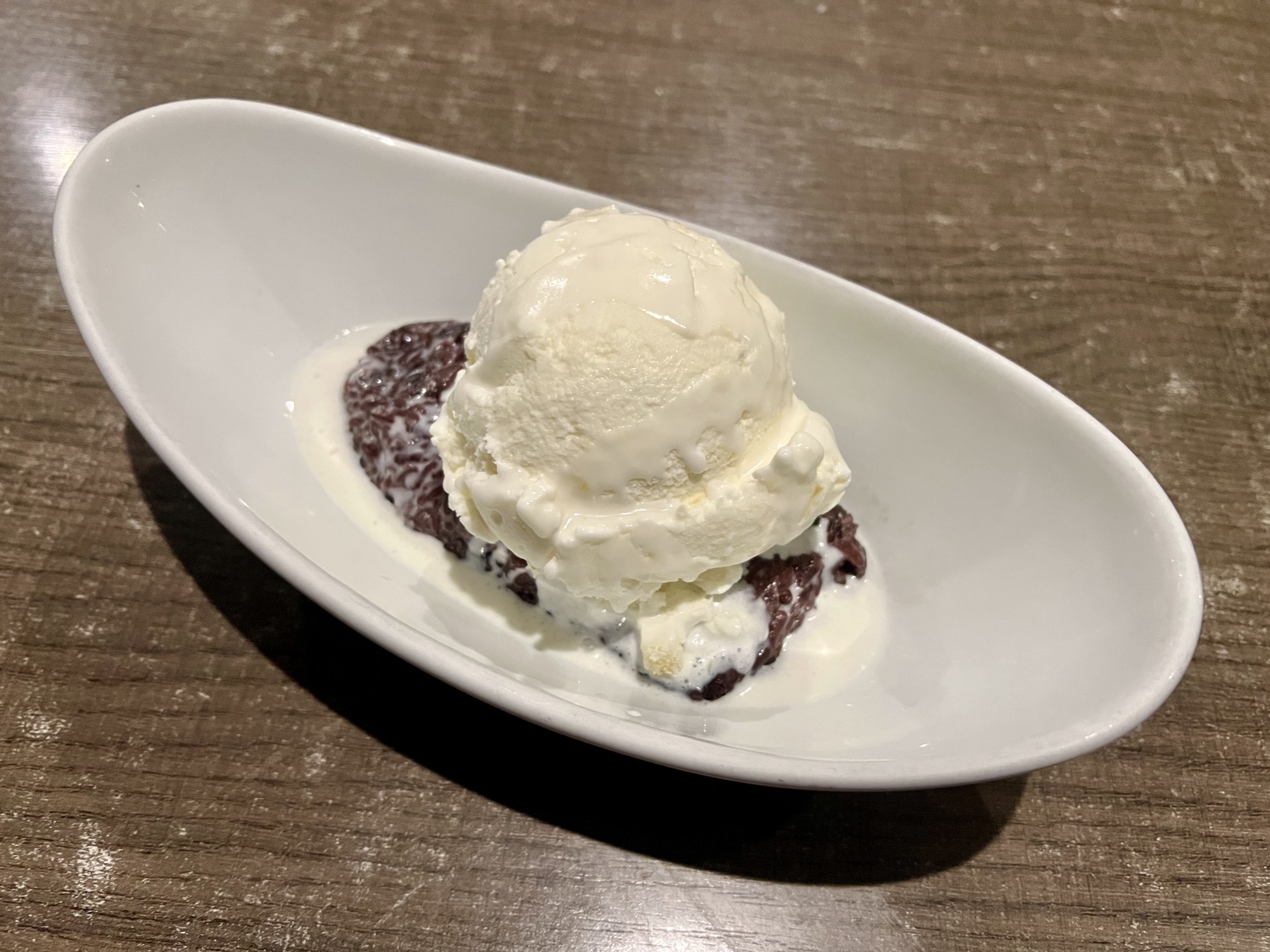
The best beverages are iced tea with condensed milk or beer. Like just about every Thai restaurant, Thai Rama sells the ubiquitous Singha, a pale lager, along with some familiar domestic bottled brands. There’s also a small selection of wine by the glass, but no cocktails. For dessert, mango with sticky rice is an appealing choice. When in season, the slightly tart fruit is balanced with starchy grain and a sweet topping of condensed milk. The Snow Ball is a colorful presentation of coconut ice cream on top of purple rice, also with condensed milk.
To be sure there have been a number of new Thai restaurants that have opened (and closed) along the light rail corridor over the past decade. Most of them are worth celebrating upon their arrival and mourning upon closure, but at the same time it’s important not to forget the classic places that have served Thai food continuously for decades. With its longstanding location in central Phoenix, isolated as it is between stations in a zone that waits for some of the construction now occurring on nearby Central Avenue, Thai Rama keeps its own tradition alive.
1221 W. Camelback Rd., Phoenix AZ 85013
https://thairamaaz.net
 PHX Rail Food