

The Navajo Nation is the largest Native American reservation in the United States and home to its largest federally recognized tribe. Nevertheless, only a little more than half of the enrolled members live within the boundaries of the reservation’s territory in Arizona, New Mexico, and Utah. Among the rest of the Diné people, a significant number live in the Phoenix Metropolitan Area. Hope’s Frybread celebrates a culinary tradition often associated with family homes and roadside stands in the Navajo Nation, among other indigenous communities in North America.

Of course, fry bread, whether written as one word or two, is also a staple at the Arizona State Fair, the Heard Museum’s annual hoop dance event, and other special events. Hope’s is one of a handful of places offering the treat in a fixed location, in this case one located just two blocks south of Mesa Drive / Main station on the A Line. The location is at the eastern end of downtown Mesa and across the street from the city’s Temple Historic District. The nearest bike racks are situated on First Avenue directly outside the Mesa municipal court building a block to the north.

Hope’s occupies the central space in an unassuming strip mall and fills its two dining rooms with color and vitality. In the front room, which provides both seating and an open kitchen, a vibrant mural celebrates the family and heritage of the proprietor, who is indeed named Hope. A second tableau near the beverage station is full of hummingbirds, prolific pollinators who are abundant in the Sonoran Desert. The second dining room doubles as a small shop selling books, DVDs, puzzles, and other items with themes linked to indigenous cultures of the American Southwest.

Although the decor is rich and varied, the menu is simple and straightforward in the best possible way. Hope’s has defined fry bread, an adaptation of commodities provided in rations to displaced native people, as its niche and attains a level of depth and excellence in pursuit of that focused mission. A menu over the counter lists the fry bread options and sides. Customers order there and the bread is then cooked in plain view behind the counter. Sitting there provides an opportunity to watch balls of dough pressed into discs and then immersed in the fryer.
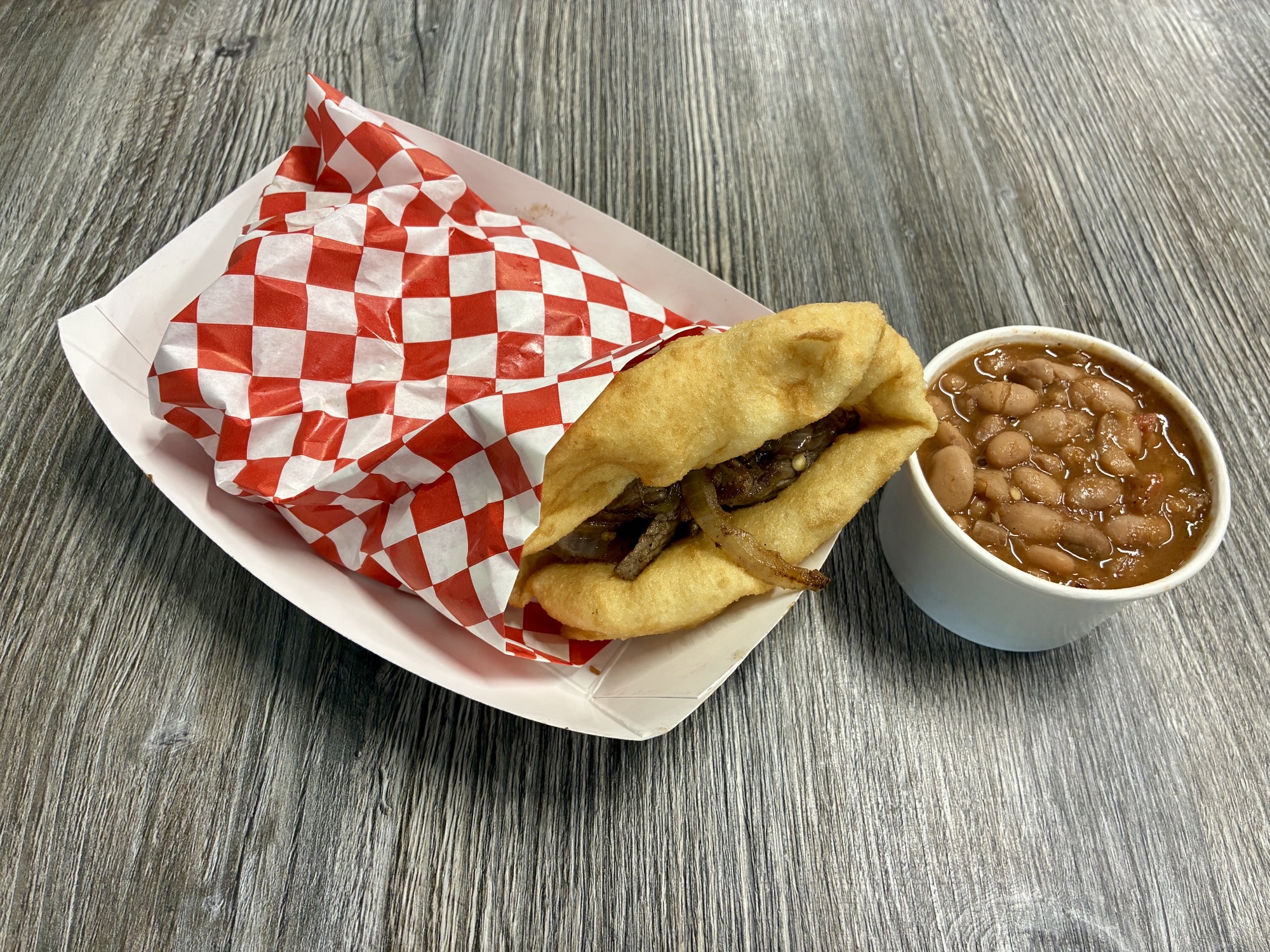
At the most basic level, it’s possible to order an unadorned piece of fry bread with a side of chili beans. This is a good option for a first-time exploration of the bread’s nuanced texture, which is slightly crisp but also airy without excessive greasiness. The chili beans are a mildly spiced combination of pintos with ground beef and spices with topping of onions and cheese. These ingredients, along with salsa and lettuce, all come together in Hope’s version of a Navajo taco, an open-faced favorite at events like the Arizona State Fair and numerous roadside stands.
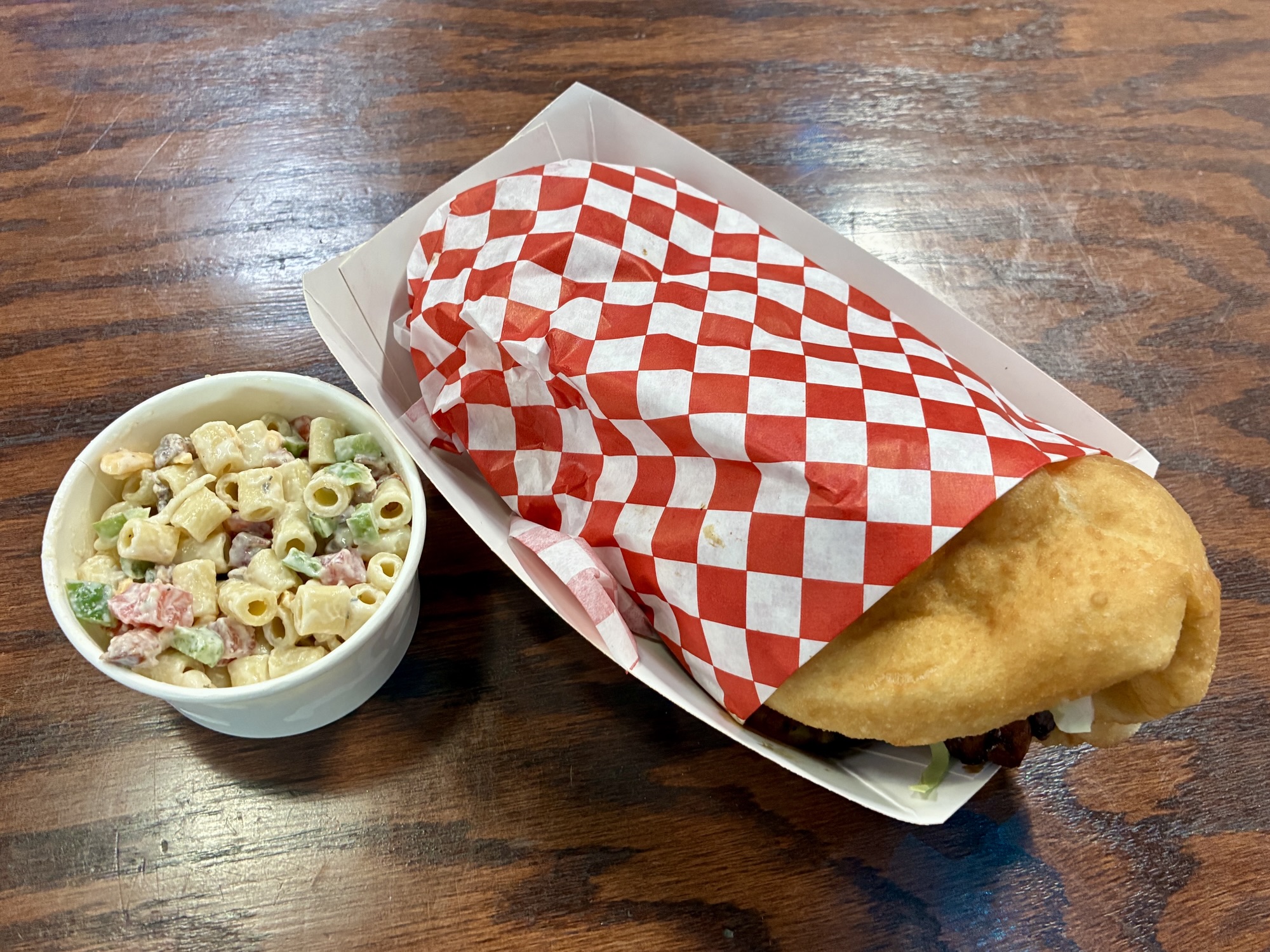
Other entrees are fashioned with fry bread folded around a filling. The Navajo burger is exactly what it sounds like: a choice of one or two beef patties encased in fry bread and accessorized with onions, tomatoes, lettuce, mayonnaise, and ketchup. The lamb sandwich is a nod to the role of mutton in the traditional Diné diet and is assertively flavored with green chili. The Asian Persuasion has thin, tender chicken breast in a sweet, slightly spicy teriyaki marinade with fresh cabbage and pineapple rings. All sandwiches come with a side of beans, chips, or pasta salad.

A frequent special is a fry bread Philly, with beef, cheese, onions, and peppers inside the sandwich, and for those who seek something vegetarian, a modified version of the Navajo taco without meat is available. For dessert, the best option after fry bread is more fry bread. To that end, Hope’s offers three varieties: the Classic, which is simply fry bread topped with honey and powdered sugar; a combination of sliced bananas and Nutella; and, finally, a s’mores fry bread anointed with a marshmallow spread, chocolate sauces and crumbled graham crackers.

These dessert fry breads can be ordered full size, which might make sense if shared by an entire family. Otherwise, a miniature version of any one of them, offered for a few dollars with an entree, is probably a better choice. In terms of drinks, the options are found in a refrigerated case near the counter and at a soda fountain towards the rear. There is no liquor license. The sprawling territory of the Navajo Nation is located several hundred miles to the northeast, and the drive takes several hours, but Hope’s adds a welcome Diné presence to Central Mesa.
 PHX Rail Food