
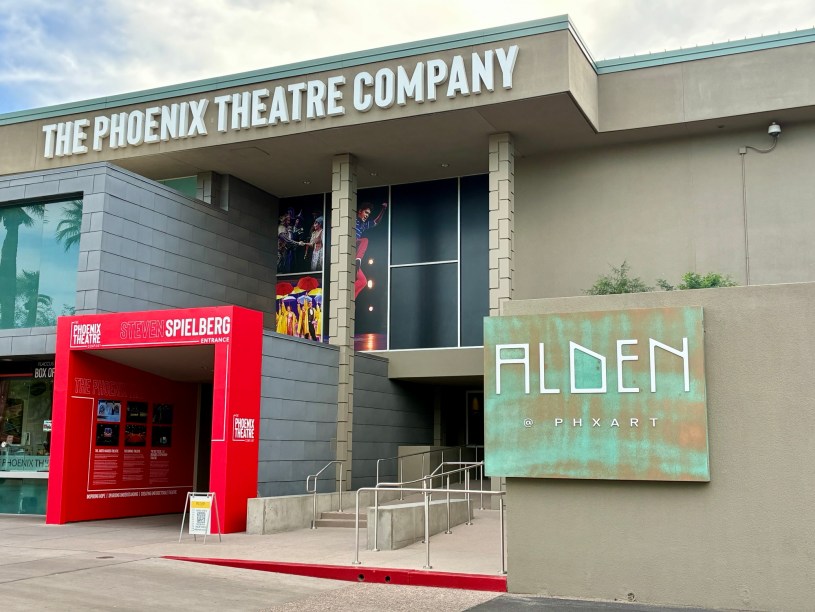
The name Alden has origins in the Old English word for “old friend.” It also happens to be the first name of Alden Dow, the architect who designed the mid-century campus originally known as the Phoenix Civic Center. When first built, it was home to Phoenix’s central library, which has since relocated a few blocks south; the Phoenix Little Theater, which is no longer little in name or size; and the Phoenix Art Museum, which has grown to include its own restaurant space, now occupied by a restaurant named Alden with food designed to feel sort of like an old friend.

Alden is situated within the museum but next to the Phoenix Theater, both of which are a block north of McDowell/Central station on the B Line. The Phoenix Art Museum has one of the best bike racks in the city. Not only is it a vibrant red, but it’s also situated next to a sculpture of a dinosaur ready to devour anyone trying to take the bikes parked there. The restaurant is accessible from three points: a door found near the museum’s Asian and Philip Curtis galleries, a door from the courtyard, and a main entrance facing the parking lot on the north side.
Museum admission is required only for the first of those three options. Nevertheless, the recently renovated galleries there are always worth a visit, and museum members receive a 10% discount on all meals at the restaurant. While Alden is within the museum’s building, its location puts it next door to the Phoenix Theater, making it a popular dining destination before or after shows there. In fact, pre-or-post-event dining accounts for enough of the restaurant’s business that diners are advised to book reservations at least 90 minutes before showtimes.
The restaurant space has been adapted and updated in a manner designed to respect Dow’s original vision and the prevailing Midcentury aesthetics in place when the structure was first built in the 1950s. The dining room is defined by columns with geometric patterns, low-hanging circular lights overhead, and half moon tables perfect for groups of three, a configuration seldom seen in restaurant design. Natural light enters via windows on the south and east sides, and a patio adjacent to the museum’s courtyard is available for seating during favorable weather.

Just as the decor seems like an updated version of classic Midcentury style, the menu incorporates contemporary versions of what might be described with the overused phrase “comfort food,” albeit with some global touches that appropriately reflect the diversity of the museum’s collections and intended audience. An old school appetizer, salmon rillettes, was a flavorful, coarse pate of smoked fish. It was a rare treat but has since been replaced by salmon crostini with whole slices of fish instead of a spread. One can hope for its eventual return.

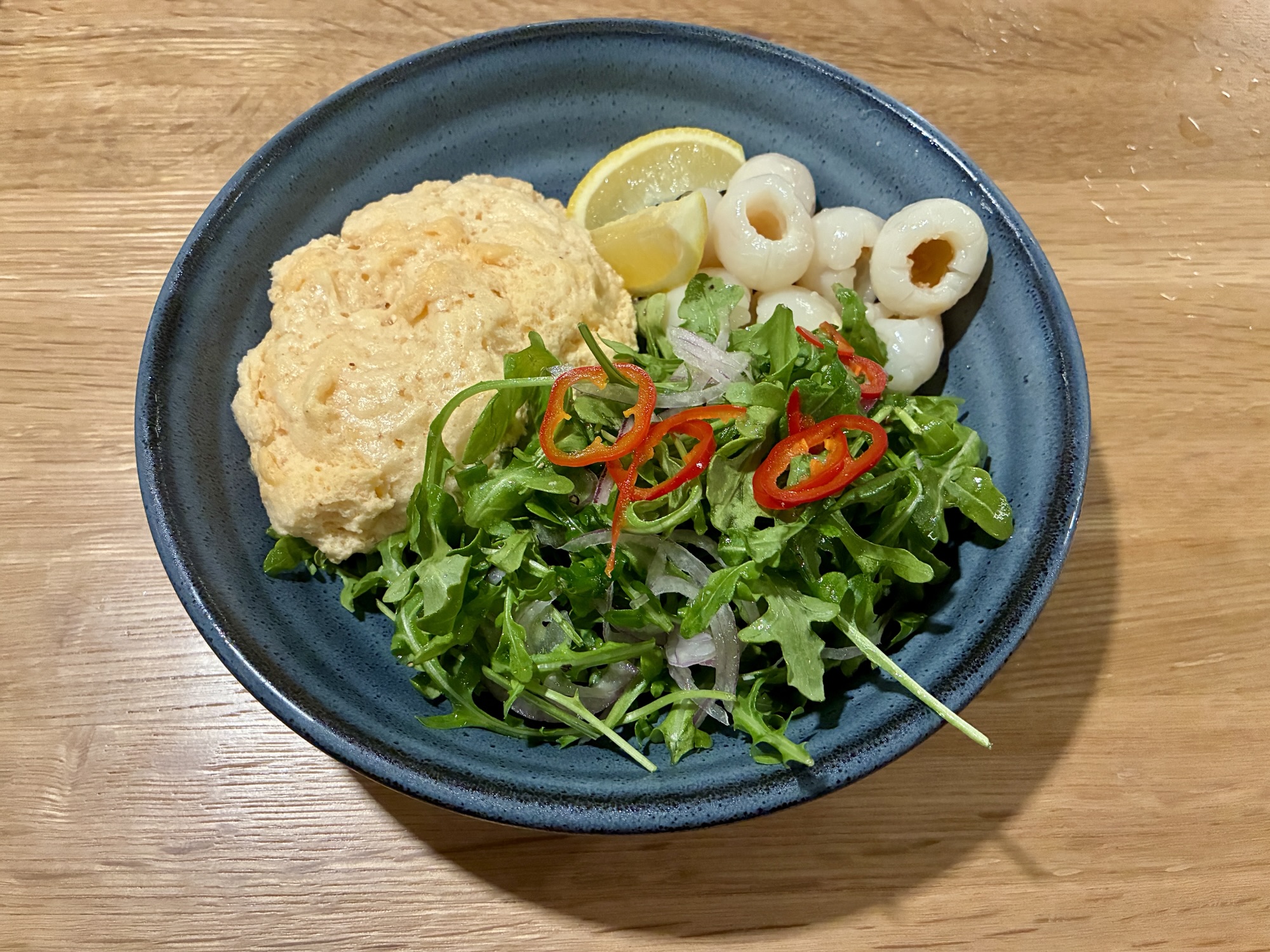
Other starters include fingerling potatoes with crisp skin drizzled with a honey glaze and cauliflower karaage fried in a Japanese style with a side of slightly spicy aioli. Salads begin with familiar favorites like a Caesar and a wedge but then incorporate global inspirations via a fattoush salad and another one defined by lychee fruit and a coconut foam. Combined with arugula, the last item is the biggest curveball on the menu, and staff wisely advise customers ordering it to mix the ingredients for an optimal blend of sweet, bitter, and salty tastes.
Among the entrees, the beef Wellington is a classic that was popular in Alden Dow’s time, and it has been resurrected skillfully with an interior of medium rare beef and a layer of prosciutto inside puff pastry. Served with a dark gravy, peas, and cauliflower puree, it’s the most expensive item on the menu but well worth the indulgence. Kielbasa and pierogies succeed due to a smoky sauce, supple dumplings, and accents of cauliflower puree and sauerkraut on top. Red Thai curry is slightly sweet with a sauce of pickled, tart, and spicy notes surrounding six shrimp.
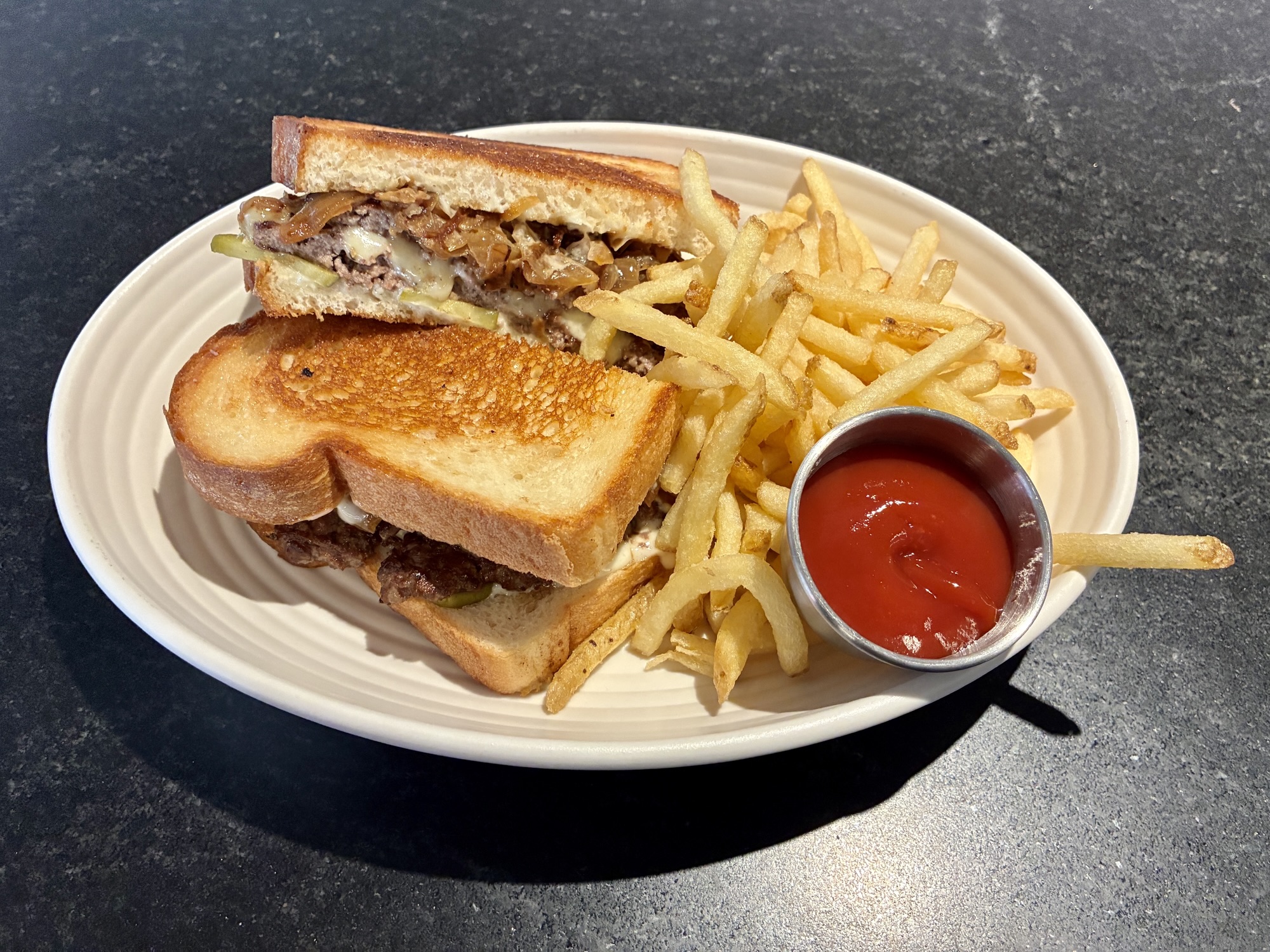
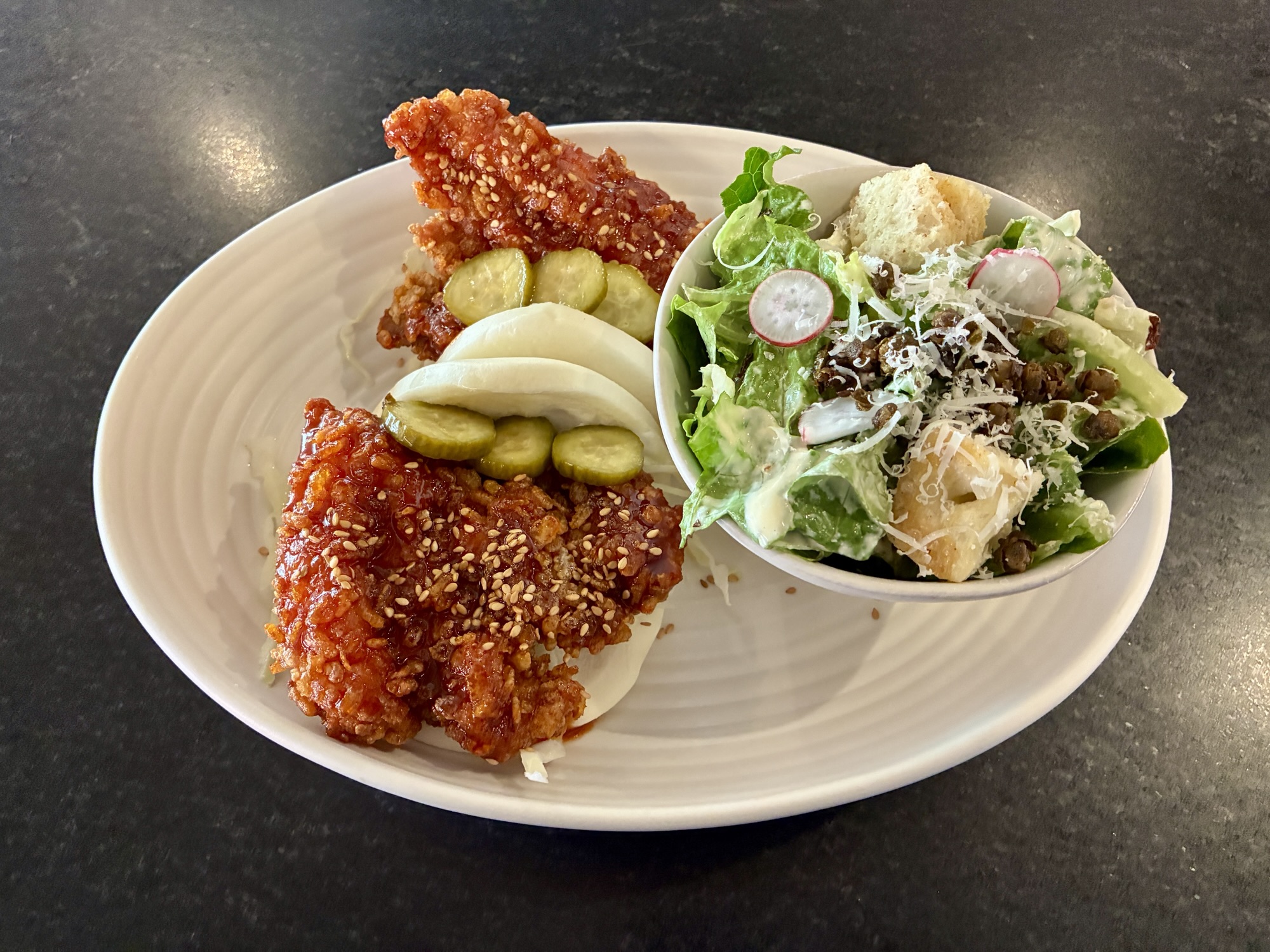
Sandwiches also showcase international influences. Alden’s version of a patty melt nearly overflows with copious grilled onions lending plenty of umami that is augmented with a melted blend of sharp cheddar and gouda, as well as tangy pickles. KFC buns, essentially Korean fried chicken served in bao come as a duo, each filled with thin, crisp poultry dressed with sesame seeds, pickles, and a drizzle of sweet chili sauce. A vegetarian option is grilled cheese with its typical companion of tomato soup. All salads come with fries or a small Caesar salad.

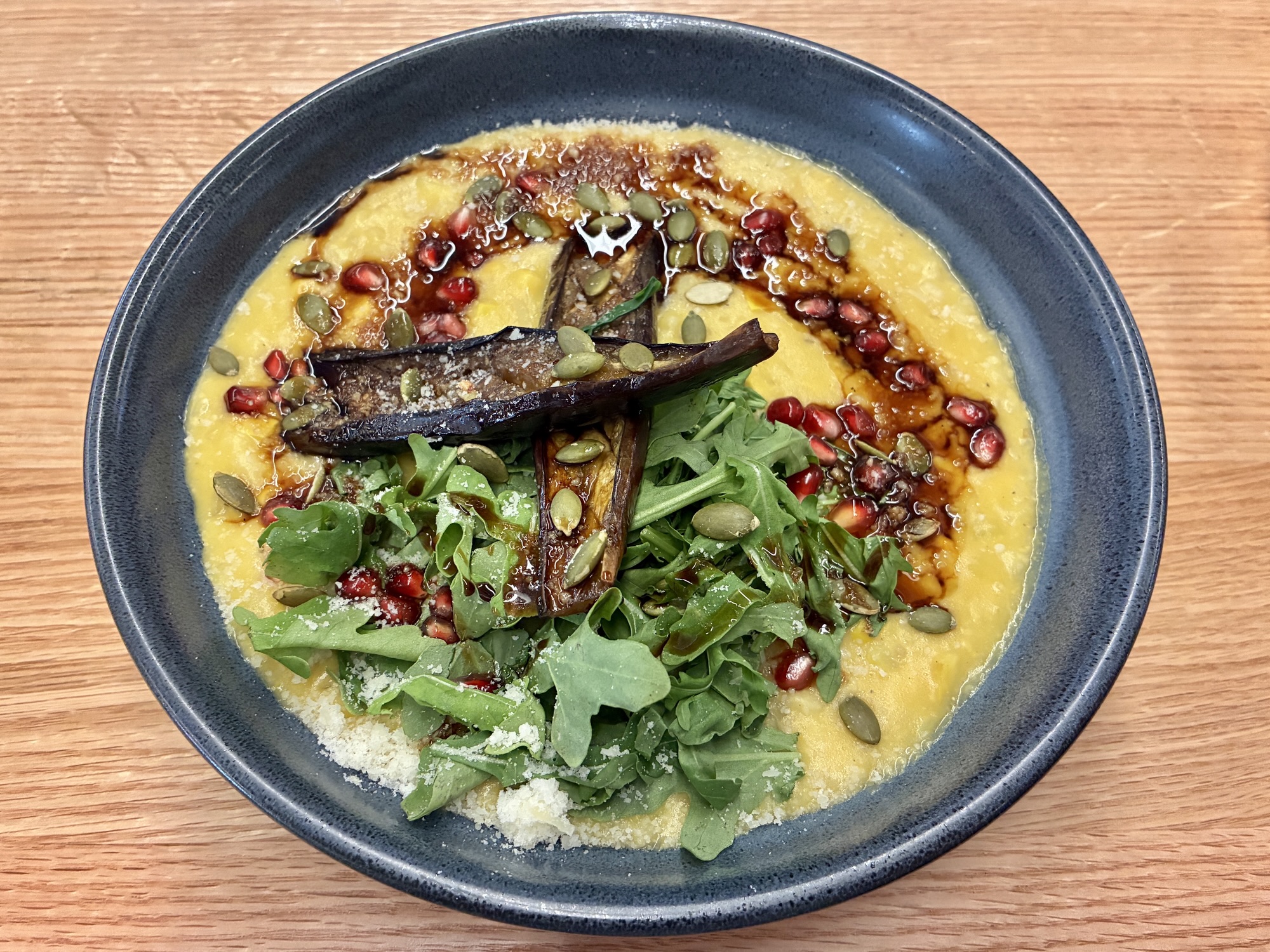
Another meatless dish is the squash risotto with pomegranate arils adding a bit of crunch and slivers of Japanese eggplant adding some substance on top of the creamy bed of rice. The restaurant’s signature dessert is a strawberry trifle, loosely modeled after the shortcake that was reportedly Alden Dow’s favorite. Additional options include a moist but dense almond cake with accents of cherry and an inevitable chocolate mousse. An apple upside down cake is not a reference to the recent finale of the show “Stranger Things” but instead a vegan dessert option.

Alden’s beverage menu includes beer, wine, and cocktails and mocktails with architectural names like Elevation with vegetal and fruit notes from aquavit, pear, and citrus and the alcohol-free Sculptural Garden combining strawberry, lavender, and seltzer. The best bargain is the Smoky Palmer, a mixture of lemonade and smoked tea with orange bitters. Alden is a recent arrival at a museum that is now more than half a century old, but with its comforting food, decor, and service, it seems to be embodying the name’s original meaning of feeling like an old friend.
 PHX Rail Food