

When the food of China, a vast nation with many distinct regions, is reduced to stereotypes, one that is foremost is the idea that Sichuan food is an inevitable inferno of scorching spice. In fact, many American Chinese restaurants will throw in some chili pods and call any dish “Sichuan.” The reality of Sichuan cuisine, as well as the culinary traditions of the nearby Hunan region of central China, is of course more complex and nuanced. In the Mesa Asian District, Spice Spirit expresses both the boldness and subtlety of Sichuan and Hunan cooking in its expansive menu.

Spice Spirit is located in the shopping center anchored by H Mart at the southeast corner of Dobson and Main, just a block west of Sycamore/Main station on the A Line. A bike rack is found immediately outside the restaurant with another over by the grocery store entrance. Spice Spirit shares a building with a smoke shop, a remnant of another era in this now bustling shopping center full of mostly Asian-oriented businesses. The generic restaurant name, rendered both in English and Chinese characters, gives little hint as to the distinctive food found once inside.
Beyond the host station that greets diners, there are two adjoining dining rooms. Although the restaurant’s full name is “Spice Spirit Chinese Cuisine & Bar,” the bar counter sees minimal use. Most of the action is focused on large tables designed for sharing of the bounty among groups of customers, and many of the items are presented in a way that makes them suitable for communal consumption. The glossy and lengthy menu is enhanced with strategically placed photos of key dishes in addition to descriptions of everything in both English and Chinese.
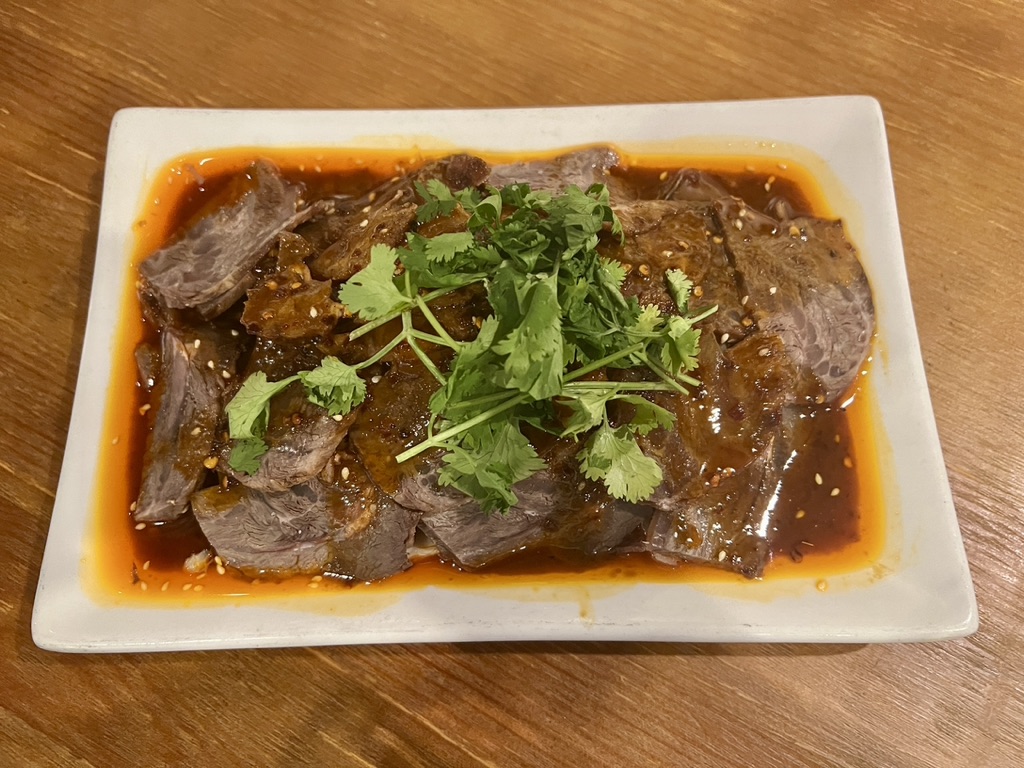
The concept of appetizers versus main dishes is somewhat of a Western construct, but Spice Spirit obliges with a small section devoted to smaller dishes that can work well as the start of a meal. That includes items like vegetable spring rolls or pork pot stickers that can be found on nearly every Chinese restaurant menu, and they’re all capably executed. It also incorporates more esoteric, at least by American standards, fare like sliced beef and ox tongue in chili sauce, which gives an early hint of the variety of meats and complexity of the flavors to come later.

Spice Spirit’s menu uses the whole animal with dishes built upon chicken gizzards, beef tendon, and the feet, livers, kidneys, and intestines of the pig. For anyone who is not awfully fond of offal, though, there are abundant options that rely on distinctive sauces and seasonings with cuts of meat less threatening to a typical American palate. Hunan style sauteed beef with wild pepper incorporates tender meat on a base of green leaves that taste like a form of turbocharged arugula. Some added bits of pickled chilies add another layer of taste.

While these items fit neatly on small plates, the Wushan grilled fish not only dominates the table when presented in its cavernous oval vessel, but also has its own page on the menu. The white fish is offered in two styles: hot and spicy, which means abundant mala spices, or “numbing” with Sichuan peppercorns (actually dried berries from prickly ash trees) to produce a unique tingling sensation in the mouth. This dish can be customized with all sorts of added meats and vegetables, and priority should be given to potatoes and other ingredients that absorb the broth.

Bo bo chicken has so many skewers protruding from a big bowl of broth that it looks like a porcupine has landed on the table. The sticks hold bits of chicken, ham, tofu skin, black fungus, and whole cloves of garlic all in a spicy soup. It’s a fun dish to share, especially among a group that enjoys the surprise of seeing what lies at the immersed end of each skewer. Another dish with an omnibus approach is the mala stir fry pot mix with cauliflower, broccoli, lotus root, black fungus, scallops, shrimp, beef, and even a little spam topped with a sprinkling of sesame seeds.

Griddle shrimp are presented in a small wok over a burner. Head-on, skin-on shrimp are piled on top of a bed of aromatics, including chives, onions, and garlic. A similar approach is used with bullfrog, which not only tastes like chicken but also looks like a popcorn version of poultry. It can be ordered with or without bones, a helpful choice given the bone-to-meat ratio in small pieces of amphibian meat. Similarly, the hot and crispy chicken bites, breaded, fried, and served with abundant sliced chilies, are probably also easier to manage if ordered without bones.

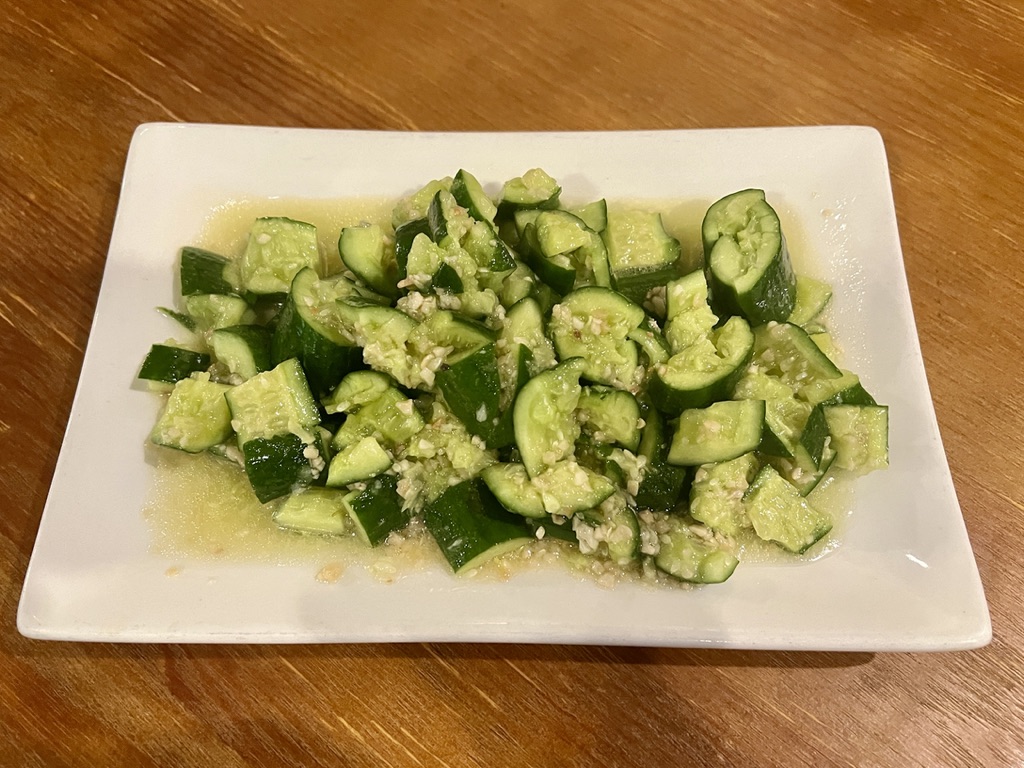
In terms of plant-based foods, the options are nearly as extensive as the meats. A minimalist appetizer of smashed cucumber is served cold with abundant garlic. Hot and spicy cauliflower is a simple vegetable dish that lives up to its name. Stir-fried chives with tofu features thin slices of bean curd that are nicely balanced with the assertives of the aromatic leaves. Green pepper and eggplants with century egg is served in a mortar and mashed with a pestle tableside, transforming the dish into a puree punctuated by bits of bell pepper and preserved egg.

Vegetables extend into the small dessert menu with slivers of sweet potato served with toffee. Another worthwhile choice is glutinous rice cakes with brown sugar, a finger food with a starchy texture similar to fried yuca. The bar, although generally not used for seating, does offer a limited selection of bottled beer and wine to supplement tea and soda. Of course, there is much more to Spice Spirit, including duck and noodle dishes, but even after exploring just a fraction of the menu, the nuance and variety of Sichuan and Hunan cuisine is evident at Spice Spirit.
1955 W. Main St. #101, Mesa AZ 85201
http://www.azspicespirit.com
 PHX Rail Food